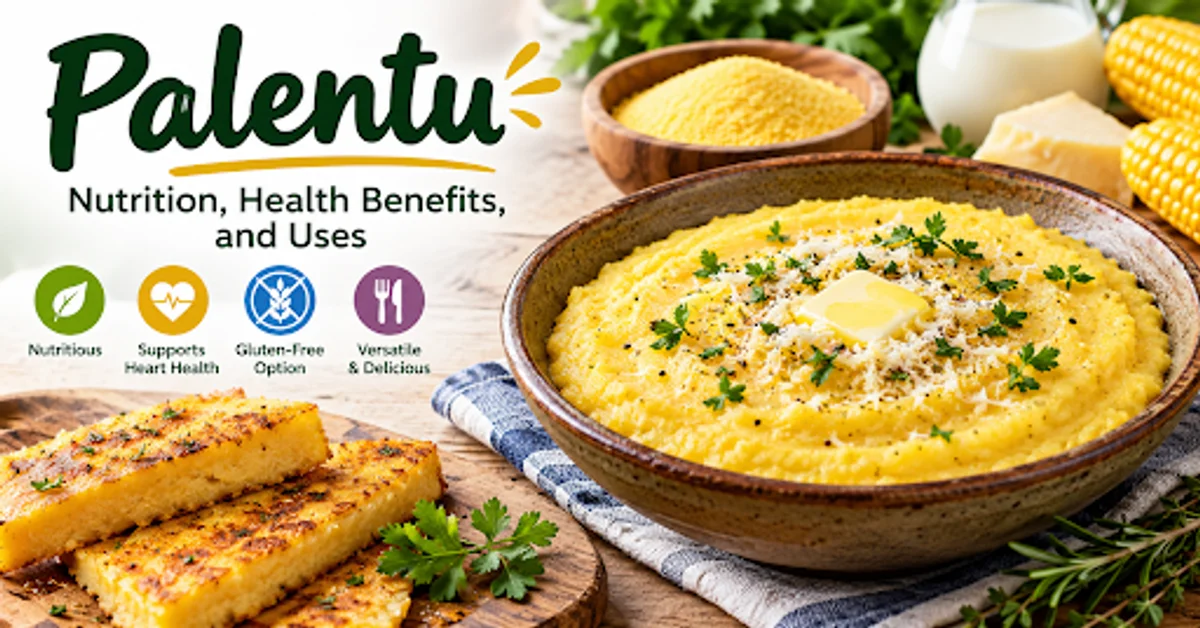
Palentu is a traditional cornmeal-based dish closely related to polenta. It is prepared by slowly cooking ground maize (cornmeal) in water, milk, or broth until it becomes thick and smooth. Depending on the cooking method and liquid ratio, Palentu can be served as a warm, creamy porridge or cooled into a firm dish that can be sliced, grilled, or fried.
Palentu is associated with traditional food cultures in parts of the Balkans and Europe. Its mild flavor makes it easy to pair with butter, cheese, herbs, roasted vegetables, mushrooms, and savory sauces. It can also be prepared with plant-based ingredients for vegetarian and vegan meals.
The comparison of Palentu vs. polenta is mainly a matter of language and culinary context. Polenta is the internationally recognized Italian term for a dish traditionally prepared from cornmeal. Palentu is closely connected to the South Slavic word palenta and may appear as its grammatical form.
There is no universal recipe that separates Palentu from polenta. Both can be cooked into a creamy porridge, enriched with butter and cheese, or allowed to cool before being grilled or fried. Regional ingredients, cornmeal texture, and family traditions often create more noticeable differences than the names themselves.
Related: Supermaked: The Future of Modern Grocery Retail
History and Origins of Palentu
Traditional Grain-Based Foods Before Maize
The history of Palentu connects with a much older tradition of grain-based cooking. Long before maize became common in Europe, communities prepared thick porridges using locally available grains. Depending on the region, these included millet, farro, spelt, barley, and buckwheat.
Such traditional grain dishes were practical because they required relatively few ingredients and could feed families using basic household equipment. People cooked grains with water over a fire, adjusting the consistency according to local preferences. Although these foods were not necessarily Palentu in its modern cornmeal form, they belonged to the same broader tradition of nourishing porridge.
How Maize Shaped Palentu’s History
Maize originated in the Americas and reached Europe following the voyages associated with Christopher Columbus in the late fifteenth century. Its spread formed part of the Columbian Exchange, the historical movement of crops, animals, people, and ideas between the Americas and the Old World. Over time, maize became an important ingredient in several European food traditions. https://pmc.ncbi.nlm.nih.gov/articles/PMC8780548/
In parts of Italy and southeastern Europe, cornmeal eventually became a foundation for familiar household dishes. Polenta developed a particularly strong association with northern Italy, while related preparations became part of regional cooking elsewhere. The Palentu food history is therefore best understood within this wider story of agricultural change and local adaptation, rather than as the history of one uniquely documented recipe.
Traditional Palentu Ingredients
Choosing the Right Cornmeal and Liquid
The essential Palentu ingredients are straightforward: cornmeal, liquid, and salt. Medium or coarse-ground cornmeal can provide a pleasantly textured result, while finer maize flour generally produces a smoother preparation. Cooking time varies according to the grind and whether the product is traditional or precooked.
Water creates a clean, simple flavor, while milk adds creaminess. Vegetable or chicken broth provides a savory base. The amount of liquid also determines the final cornmeal consistency, so it is useful to follow the cornmeal package instructions and adjust the mixture as it cooks.
Butter, Cheese, Herbs, and Other Flavor Enhancers
Butter and cheese can make Palentu richer and more flavorful. Parmesan or another melting cheese adds savory depth, while fresh herbs such as parsley, thyme, or rosemary contribute fragrance. A small drizzle of olive oil is another useful addition, especially when serving the dish with roasted vegetables or Mediterranean-style sauces.
For a lighter or plant-based preparation, use vegetable broth, olive oil, and dairy-free alternatives if desired. Garlic, black pepper, mushrooms, tomatoes, and caramelized onions can also add character without making the recipe complicated. These flexible additions help turn a basic cornmeal dish into a meal suited to different tastes.
How to Cook Palentu at Home
Step-by-Step Palentu Preparation
A basic Palentu recipe requires only a saucepan, a spoon or whisk, and a few ingredients. For approximately four side-dish servings, gather:
- 1 cup cornmeal
- 4 cups water or broth, adjusted to the package directions
- Salt to taste
- 1 tablespoon butter or olive oil, optional
- Grated cheese or herbs, optional
Bring the liquid to a gentle boil in a saucepan and add salt. Gradually pour in the cornmeal while whisking continuously. Reduce the heat once the mixture begins to thicken, then cook according to the package instructions, stirring regularly until the grains are tender and the texture is smooth.
Remove the pan from the heat and stir in butter, olive oil, or cheese if desired. Add a little hot liquid if the mixture becomes too thick. Serve immediately for a creamy result, or transfer it to a shallow dish if you want to prepare firm slices later.
Tips for Smooth, Lump-Free Palentu
The best Palentu cooking method begins with gradual cornmeal addition. Pouring it in slowly while whisking helps prevent dry clumps from forming. Maintaining moderate heat also reduces the chance of sticking or scorching, particularly as the mixture becomes thicker.
Different cornmeal products need different cooking times, so avoid assuming that every variety will be ready after the same number of minutes. Stir regularly, check whether the grains are tender, and add more liquid when necessary. If using instant cornmeal, follow its specific instructions because it may cook much faster than traditional coarse-ground varieties.
Creamy vs. Firm Palentu
How to Make Soft and Creamy Palentu
Creamy Palentu is ideal when served straight from the saucepan. Its soft texture pairs well with sautéed mushrooms, tomato sauce, roasted vegetables, beans, or a little grated cheese. For a particularly smooth finish, stir in warm liquid gradually near the end of cooking.
This version works as a comforting breakfast, lunch, or dinner side. You can also serve it beneath a vegetable stew or other flavorful main dish, allowing the creamy cornmeal to absorb some of the sauce. The mild taste makes it an adaptable base rather than a competing flavor.
How to Prepare Firm and Sliceable Palentu
For firm Palentu, cook the cornmeal until thick, then spread it in a lightly oiled shallow dish. Smooth the surface and allow it to cool until set. Once firm, cut it into squares, triangles, or strips according to how you plan to serve it.
These pieces can be grilled, baked, or pan-fried until their surfaces turn golden. The inside remains tender while the outside becomes pleasantly crisp. This transformation makes leftovers useful and provides a different experience from freshly cooked porridge without requiring a separate batch.
Palentu Nutrition and Health Benefits
Nutritional Value and Essential Macronutrients
The Palentu nutritional value depends on the cornmeal, portion size, liquid, and toppings used. Plain cornmeal Palentu is primarily a source of carbohydrates, which provide energy. Whole-grain cornmeal can also contribute dietary fiber, while maize contains varying amounts of vitamins and minerals. https://www.fao.org/4/t0395e/T0395E01.htm
However, Palentu is not a complete meal nutritionally when eaten alone. Cornmeal provides relatively little protein compared with foods such as beans, eggs, dairy products, fish, and many soy-based foods. Pairing it with vegetables and a protein source can make the overall meal more balanced. Butter, cheese, and cream add richness but also change its energy content and fat levels.
Is Palentu Naturally Gluten-Free?
Pure maize does not naturally contain gluten, so Palentu made from uncontaminated cornmeal can fit a gluten-free diet. This can make it a useful alternative to wheat-based side dishes for people who need to avoid gluten. https://pmc.ncbi.nlm.nih.gov/articles/PMC8780548/
People with celiac disease should check product labels and choose cornmeal specifically labelled gluten-free when cross-contact is a concern. Cornmeal can be processed or packaged alongside wheat, barley, or rye products. Gluten-free status also depends on added ingredients, so sauces, seasonings, and toppings should be checked when necessary.
Cultural Significance of Palentu
Palentu in Balkan and Italian Food Traditions
Cornmeal dishes have become part of the food heritage of several European regions. In Italy, polenta is especially associated with northern regional cooking, where it has been served with cheese, mushrooms, fish, meat, and vegetable sauces. Related preparations appear in Balkan and other Mediterranean food traditions, with local names and serving customs varying from place to place.
These similarities reflect how communities adapt staple ingredients to their environments and preferences. Cooking methods may differ according to cornmeal grind, household equipment, and regional ingredients. It is more accurate to view Palentu as part of a connected family of traditional foods than to assume every region prepares it in precisely the same way.
Palentu as a Symbol of Rural Life and Comfort
Traditional cornmeal meals were valued because they were practical, affordable, and easy to combine with whatever else was available. In farming communities, a pot of warm porridge could serve several people, while firm leftovers could be reheated or cooked again. This usefulness helped similar dishes become familiar features of home cooking.
Today, the same qualities appeal to people who prefer straightforward meals and flexible ingredients. Palentu can evoke the comfort of homemade food while leaving plenty of room for modern creativity. Its cultural value lies not only in its ingredients but also in the everyday traditions surrounding preparation and sharing.
Popular Palentu Variations and Recipes
Grilled and Pan-Fried Palentu Slices
Grilled Palentu offers a satisfying change from the creamy version. First, prepare the cornmeal mixture and let it cool until firm. Cut it into slices, brush lightly with olive oil, and grill until the outside develops golden marks and a lightly crisp surface.
Fried Palentu follows a similar process, but the slices are cooked in a pan with a little oil until browned on both sides. Season with herbs, black pepper, or grated cheese, and serve with a tomato dip or roasted vegetables. These methods are useful when you want to give leftover Palentu a fresh texture.
Vegetarian and Vegan Palentu Bowls
Palentu fits naturally into vegetarian cuisine because it pairs well with vegetables, beans, lentils, and dairy products. A bowl topped with roasted peppers, mushrooms, spinach, and white beans offers a range of textures and flavors. Tomato sauce or fresh herbs can bring the ingredients together.
For vegan cuisine, prepare the base with water or vegetable broth and use olive oil instead of butter. Add chickpeas, lentils, sautéed greens, or roasted seasonal vegetables for more protein and variety. These plant-based recipes demonstrate how a simple cornmeal base can support satisfying meals without relying on animal products.
Best Ways to Serve and Store Palentu
Delicious Toppings and Meal Pairings
Palentu serving ideas range from simple to elaborate. For breakfast, serve it warm with milk or a suitable plant-based alternative, depending on your preference. For lunch or dinner, combine it with beans, roasted vegetables, grilled mushrooms, cheese, or a hearty stew.
The choice of topping can reflect different food traditions. Olive oil, tomatoes, and herbs give the dish a Mediterranean character, while butter and cheese create a richer finish. You can also use it as a versatile side dish alongside fish, meat, or plant-based mains. Because the flavor is mild, the seasoning and accompaniments largely determine the final result.
Proper Cooling, Refrigeration, and Leftover Ideas
If you have leftover Palentu, transfer it to a shallow container and refrigerate it promptly rather than leaving it at room temperature for an extended period. Once cooled, it will usually become firm enough to slice. Store leftovers in a covered container and use them within three to four days, following standard food-safety guidance.
Reheat creamy leftovers with a splash of water, milk, or broth, stirring until hot. Firm pieces can be grilled, baked, or pan-fried. Discard food that has been stored improperly or shows signs of spoilage. With suitable handling, leftovers can become the starting point for another quick and enjoyable meal.
Related: Çievri: Philosophy, Benefits, and Principles
Frequently Asked Questions
What is Palentu?
Palentu is a cornmeal-based dish similar to polenta. It can be served warm and creamy or cooled into a firm texture for grilling or frying.
Is Palentu the same as Polenta?
Palentu is closely related to polenta. The difference is mainly linguistic, as palenta is used in some South Slavic languages to describe this traditional cornmeal dish.
What ingredients are used to make Palentu?
The main Palentu ingredients are cornmeal, water or broth, and salt. Butter, cheese, olive oil, and herbs can be added for extra flavor.
Is Palentu healthy?
Palentu provides carbohydrates for energy. Pairing it with vegetables and protein-rich foods, such as beans, eggs, or cheese, can make a more balanced meal.
Is Palentu gluten-free?
Yes, Palentu made from pure cornmeal is naturally gluten-free. People with celiac disease should choose certified gluten-free cornmeal to avoid cross-contact during processing.
Summary
Palentu brings together simplicity, versatility, and a connection to traditional food culture. Made primarily from cornmeal and liquid, it can be enjoyed as creamy porridge or transformed into firm slices for grilling and frying. Its relationship with polenta also reveals how food names and recipes travel across languages and regions.
From its place within the wider history of maize to its modern role in vegetarian, vegan, and gluten-free cooking, Palentu remains practical and adaptable. With thoughtful toppings, balanced accompaniments, and straightforward preparation, it can become part of countless meals. Its lasting appeal comes from a simple idea: familiar ingredients can create food that is comforting, flexible, and worth sharing.