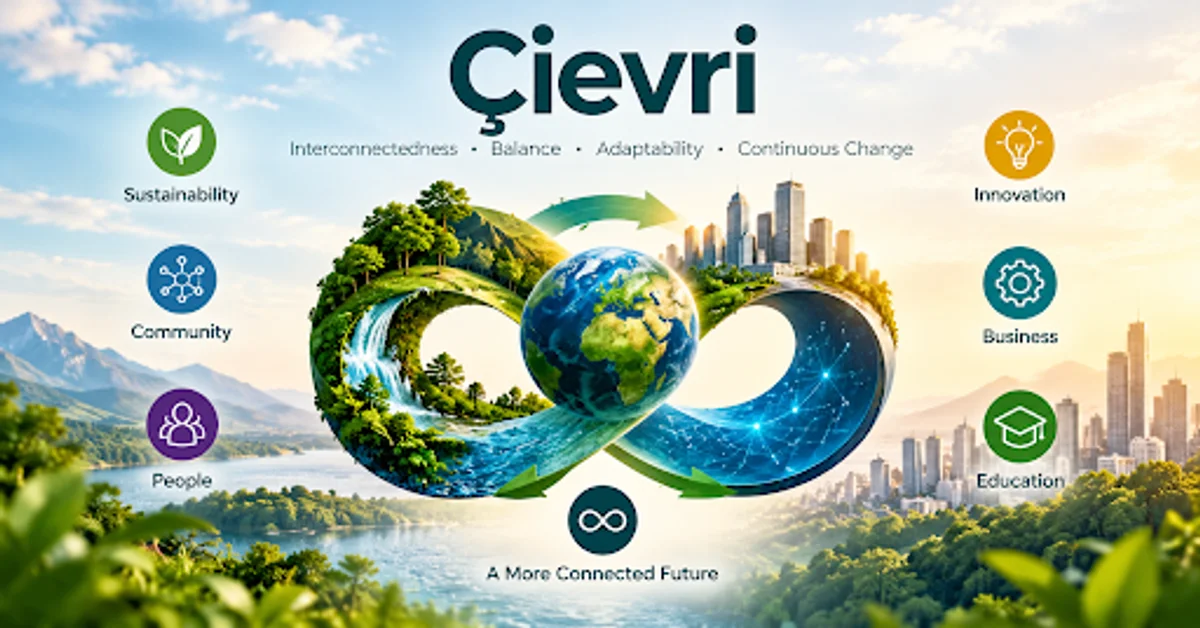
Çievri is a broad concept associated with interconnectedness, balance, adaptability, and continuous change. It encourages people to understand how different elements work together within a larger system. These elements may include individuals, organizations, technologies, communities, and natural environments. Instead of viewing each part independently, the çievri concept emphasizes relationships and the effects that individual actions can have on the whole.
The term appears in discussions about philosophy, sustainability, business, and modern systems. However, its meaning is not universally established, and there is limited verified evidence identifying çievri as a formal academic theory. Therefore, it is best understood as an interpretive concept whose meaning depends on the context in which it is used.
The main principles associated with çievri include balance and harmony, adaptability and change, interconnected relationships, and continuous improvement. These ideas encourage people to recognize patterns, consider long-term consequences, and create arrangements that can respond to changing circumstances. They can be useful when exploring complicated challenges involving people, resources, and technology.
Flexibility is another important characteristic. A çievri-inspired approach does not require every situation to follow the same process. Instead, it encourages thoughtful adjustments according to specific needs. Although these principles can guide practical decisions, their effectiveness depends on how they are applied and evaluated.
Related: Witelovers: Benefits, Trends, and Home Décor
The History and Origin of Çievri
Possible Linguistic Roots of Çievri
The exact çievri origin has not been reliably established. One proposed explanation connects the spelling with Turkish words such as çevre, meaning surroundings or environment, and çevir, meaning to turn or translate, depending on context. These words may suggest associations with surroundings, movement, and transformation, but they do not establish the etymology of çievri itself.
The Turkish Language and other linguistic references can help readers investigate related words, but similar spelling does not automatically prove a shared origin. Since çievri is not clearly established as a standard term with a documented historical definition, claims about its linguistic background should remain cautious.
How the Concept of Çievri Has Evolved
The available descriptions of çievri connect it with contemporary concerns such as environmental responsibility, organizational efficiency, personal development, and digital transformation. These subjects increasingly require people to consider relationships between different systems rather than focus on isolated tasks.
However, there is insufficient verified historical evidence to identify when the modern concept first appeared, who introduced it, or whether it developed through a specific cultural tradition. Its reported history should therefore be distinguished from the documented histories of established disciplines such as Systems Theory, Ecology, and Sustainability.
The Symbolism Behind Çievri
Cycles, Renewal, and Continuity
Çievri symbolism is often interpreted through cycles, renewal, and continuity. Natural processes provide useful examples of these ideas. Seasons change, water moves through the water cycle, and plants grow, produce seeds, and begin new generations. Such patterns show how change can contribute to continuity rather than simply represent an ending.
Circular patterns can also help people think about learning and personal development. A project may involve planning, action, evaluation, and improvement before another cycle begins. When understood symbolically, çievri encourages people to recognize recurring patterns and use experience to make better decisions.
Balance, Harmony, and Interconnectedness
Balance and harmony are central themes associated with çievri. In natural environments, organisms interact with one another and with their surroundings. Changes in one part of an ecosystem can influence other parts, illustrating why relationships matter when studying complex environmental processes.
The same principle applies to communities and organizations. Communication, shared responsibilities, and reliable coordination can help different groups work toward common goals. However, balance does not mean avoiding every disagreement or change. Healthy systems may need adjustments, debate, and innovation to remain effective.
The Philosophy and Core Principles of Çievri
Systems Thinking and Holistic Perspectives
The çievri philosophy is commonly described through ideas similar to Systems Thinking and Holism. Systems Thinking examines how different components interact, while Holism emphasizes understanding a whole rather than considering its parts exclusively. Both perspectives can help explain why a decision that benefits one area may create unexpected effects elsewhere.
For example, a company might reduce operating costs by changing its delivery process. However, if the change increases delivery delays or customer complaints, the overall result may be negative. Looking at interconnected systems helps decision-makers evaluate multiple outcomes before choosing a solution. These established approaches provide useful frameworks for understanding the broader ideas associated with çievri.
Adaptability, Growth, and Continuous Improvement
Adaptability allows people and organizations to respond to new information, changing priorities, and unexpected challenges. Within a çievri-inspired approach, flexibility is combined with careful observation and a willingness to improve existing methods. Rather than treating a plan as permanent, individuals can evaluate results and make appropriate adjustments.
Continuous Improvement offers a practical way to apply this principle. Teams can identify a problem, test a solution, measure the outcome, and refine their approach. Individuals can follow a similar process when developing skills or improving daily routines. These methods are established practices in their own right; they should not be presented as techniques invented by çievri.
How Çievri Is Applied in Modern Life
Çievri in Business, Technology, and Education
Çievri in business can be understood as an emphasis on communication, coordinated workflows, and organizational efficiency. Businesses often depend on relationships between employees, suppliers, customers, and management systems. Clear responsibilities and effective information sharing can reduce unnecessary delays and help teams respond to changing demands.
In technology, similar principles appear in digital transformation, Cloud Computing, Artificial Intelligence, and Automation. Connected platforms can help organizations share information and streamline repetitive tasks. In education, collaborative environments and accessible learning resources can encourage communication and knowledge sharing. These are examples of practices compatible with the concept, not proof that çievri is an officially adopted framework in these industries.
Çievri in Sustainability and Personal Development
Çievri in sustainability can be interpreted as an emphasis on resource conservation, ecological balance, and long-term environmental responsibility. Environmental Science and Environmental Management examine how human activities affect natural resources and ecosystems. Practices such as reducing waste, improving energy efficiency, and protecting biodiversity offer concrete ways to support environmental goals.
Personal development provides another possible application. People can review their routines, recognize recurring challenges, and make gradual improvements. Setting realistic goals, reflecting on experience, and maintaining healthy relationships can support long-term progress. In both sustainability and personal growth, meaningful results come from consistent actions rather than from adopting a label alone.
The Main Benefits of Çievri
Better Organization, Collaboration, and Efficiency
One potential benefit of applying çievri-inspired principles is better organization. When people understand how tasks relate to broader goals, they can prioritize responsibilities, improve communication, and identify unnecessary steps. This approach may be especially useful in projects that require coordination among several teams.
Collaboration can also improve when people understand how their contributions affect others. Shared expectations, clear communication channels, and regular feedback can help create more effective working relationships. However, improved performance should be assessed through practical indicators, such as completion times, error rates, customer feedback, and resource use, rather than assumed from the concept itself.
Long-Term Resilience and Sustainable Growth
Organizational resilience refers to the ability to prepare for disruptions, respond to challenges, and recover while continuing essential operations. A system that regularly evaluates risks and maintains effective communication may be better prepared to handle unexpected changes. These practices reflect some of the adaptable and interconnected principles associated with çievri.
Sustainable growth also requires attention to long-term stability. Businesses and communities benefit when they consider financial resources, human needs, environmental impacts, and future responsibilities together. Effective Resource Management can support these goals by reducing waste and improving planning. The benefits depend on thoughtful implementation, suitable resources, and measurable outcomes.
Çievri vs. Traditional Approaches
Understanding the Key Differences
Traditional approaches vary considerably, so çievri cannot be compared fairly with every conventional method as if they formed two clearly defined systems. Nevertheless, the concept is often contrasted with approaches that focus narrowly on individual tasks, immediate results, or fixed procedures. A çievri-inspired perspective instead encourages attention to relationships, feedback, and wider consequences.
For example, a team that measures success only by the number of completed tasks may overlook quality, employee workload, or customer satisfaction. A broader approach would consider these factors together. This does not mean traditional methods are always ineffective. Clear procedures, specialized responsibilities, and short-term targets remain valuable when they are appropriate to the situation.
When a Çievri-Inspired Approach May Be Useful
A çievri-inspired approach may be useful when a challenge involves several connected elements. Examples include coordinating a complex project, improving communication between departments, planning resource use, or assessing the environmental effects of a decision. Looking beyond individual tasks can reveal problems and opportunities that might otherwise remain unnoticed.
It can also help when conditions change frequently. Teams may benefit from reviewing their plans, learning from feedback, and adjusting their methods. Before applying this approach, however, decision-makers should define the problem clearly, establish measurable objectives, and select practical methods suited to their circumstances.
Challenges and Limitations of Çievri
Unclear Definitions and Limited Verified Research
One of the main limitations of çievri is its uncertain definition. Different descriptions associate the term with philosophy, sustainability, business operations, and interconnected systems, but there is no widely recognized definition that unifies these interpretations. Readers may therefore encounter explanations that sound authoritative without providing reliable supporting evidence.
A trustworthy discussion should distinguish between the proposed meaning of çievri and established research in related fields. Systems Theory, Ecology, and environmental science have their own terminology, methods, and bodies of research. Their findings should be attributed to the relevant disciplines rather than presented as scientific proof of çievri.
Practical Barriers to Applying Its Principles
Applying interconnected thinking can be challenging when organizations have limited resources, outdated technology, or unclear responsibilities. System changes may require staff training, updated procedures, investment, and time. If these needs are ignored, even a promising improvement plan may produce disappointing results.
Another challenge is excessive complexity. Considering every possible relationship can slow decisions and distract teams from immediate priorities. A practical approach should focus on the factors that matter most, use reliable information, and evaluate results regularly. The goal is not to make every process complicated but to create better-informed and more balanced decisions.
The Future of Çievri
Çievri in Digital Transformation and Innovation
The future of çievri is difficult to predict because its definition and adoption remain uncertain. Nevertheless, the broader ideas associated with it are relevant to modern innovation. Digital Transformation increasingly connects data, software, communication, and operational processes, making effective system integration an important consideration for many organizations.
Artificial Intelligence and Automation can support analysis and repetitive tasks, while Cloud Computing enables access to shared digital resources. These technologies also introduce concerns involving privacy, security, reliability, and human oversight. An interconnected perspective can help organizations consider these issues together, provided that decisions rely on established technical practices and evidence.
The Growing Importance of Sustainability and Connected Systems
Sustainability is likely to remain important as communities address resource use, waste, biodiversity, and climate-related challenges. The Circular Economy offers an established model for keeping products and materials in use for longer, reducing waste, and improving resource efficiency. Regenerative Agriculture similarly focuses on farming practices intended to improve soil health and support ecological functions.
These approaches demonstrate the value of understanding relationships between production, consumption, and natural systems. Çievri may continue to appear in discussions that explore similar themes, but its future status as a distinct concept is uncertain. Its lasting value will depend on whether the term develops a clearer definition and whether practical claims can be supported by credible evidence.
Related: Cricfooty: Exploring Its Origins and Legacy
Frequently Asked Questions
What does çievri mean?
Çievri is described as a concept associated with balance, interconnectedness, adaptability, and recurring patterns. Its exact meaning is not universally established, so interpretations may differ between sources.
Where does the word çievri come from?
Its origin has not been reliably confirmed. Some interpretations suggest a connection with Turkish words such as çevre and çevir, but this proposed relationship should not be treated as proven etymology.
Is çievri a recognized scientific theory?
There is insufficient verified evidence to classify çievri as an established scientific theory. Related ideas can be explored through recognized disciplines such as Systems Thinking, Systems Theory, and Environmental Science.
How can çievri be applied in business?
A çievri-inspired approach may encourage better communication, coordinated workflows, adaptable planning, and attention to the relationships between teams. Results should be measured using practical performance indicators.
Is çievri connected to sustainability?
It is often discussed in connection with sustainability because both emphasize relationships, resource use, and long-term outcomes. Established practices such as recycling, resource conservation, and circular economy strategies provide concrete ways to pursue these goals.
Summary
Çievri is described as a flexible concept associated with interconnectedness, balance, adaptability, and continuous improvement. Its proposed applications span business, technology, education, sustainability, and personal development. These themes encourage people to consider how individual actions affect larger systems and how thoughtful adjustments can support long-term goals.
However, the term does not have a clearly established universal definition or a verified history as a formal theory. Understanding this distinction helps readers explore the idea without confusing interpretation with documented fact. Established disciplines such as Systems Thinking, Systems Theory, and Ecology offer reliable foundations for examining many of the same themes.
The practical value of çievri lies in the questions it encourages people to ask: How are different parts connected? What consequences might a decision create? Can resources be used more effectively? What changes would make a system more adaptable and sustainable? These questions can support thoughtful planning across many areas of life.
Ultimately, positive outcomes require more than an appealing concept. They depend on clear objectives, reliable evidence, responsible decisions, and consistent evaluation. By combining a broad perspective with established methods, individuals and organizations can pursue better coordination, sustainable practices, and meaningful long-term progress.