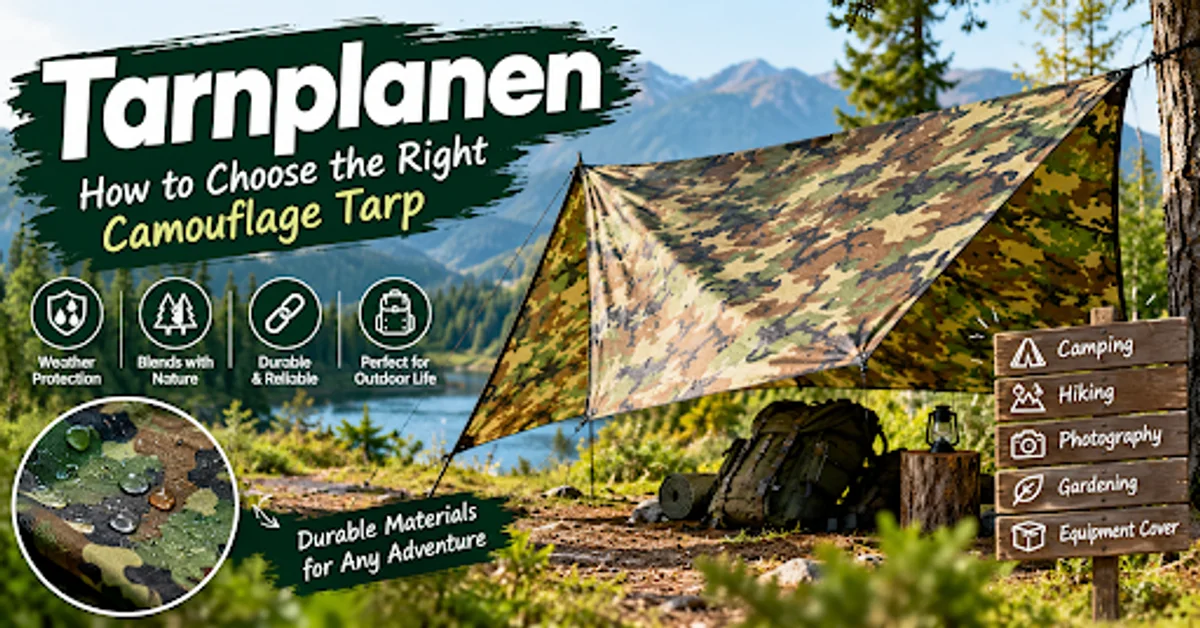
Tarnplanen is a German word that translates to camouflage tarpaulins or camouflage protective sheets in English. These covers combine the practical function of a traditional tarpaulin with camouflage patterns designed to blend into natural surroundings. They are commonly associated with camping, outdoor recreation, equipment protection, and wildlife photography.
The word has two parts. “Tarn” relates to camouflage or concealment, while “Planen” is the plural of the German word “Plane,” meaning a tarpaulin or protective sheet. A single sheet is called a Tarnplane, while multiple sheets are Tarnplanen. The term describes a category of products rather than one specific brand or manufacturer.
The main difference between Tarnplanen and ordinary tarpaulins is their appearance. Standard tarps often come in solid colours, such as blue, green, or silver, whereas a camouflage tarpaulin usually features woodland patterns, earthy shades, or other designs intended to blend into particular environments.
Both products can offer protection from rain, dust, and sunlight, depending on their materials and construction. However, camouflage does not automatically mean better waterproofing, durability, or strength. Choosing the right product requires checking its fabric, coating, dimensions, and intended use.
Related: Chromtex: Meaning, Uses, Properties, and Industrial Applications
History and Development of Tarnplanen
Military Origins of Camouflage Tarpaulins
Camouflage coverings have a long association with military field equipment. Historically, cloth sheets and protective coverings helped shield supplies and equipment from environmental conditions while making them less visually noticeable. Their patterns and colours were selected according to the surroundings in which they were used.
As textile manufacturing developed, synthetic materials and improved coatings expanded the possibilities for outdoor covers. Lighter fabrics, reinforced edges, and improved resistance to moisture made portable tarpaulins more practical. Although military applications influenced the development of camouflage equipment, not every modern Tarnplanen is designed for military purposes.
Modern Uses in Civilian Outdoor Activities
Today, camouflage tarpaulins are available for various civilian activities. Campers use them for temporary shelters, photographers use suitable screening covers, and outdoor workers use them to protect equipment from dirt and rain. Gardeners may also use them to cover tools, supplies, and temporary storage areas.
In Germany and other European countries, camouflage-patterned outdoor products are available through different equipment retailers. Their popularity reflects a combination of practical protection, portability, and visual preference. The most suitable design depends on the user’s environment and the conditions the cover must withstand.
Key Features of Tarnplanen
Camouflage Patterns and Natural Colours
One of the most recognisable Tarnplanen features is its camouflage pattern. Woodland camouflage often combines green, brown, olive, and dark shapes to resemble natural vegetation. Other designs may use sand, grey, or muted earth tones for different environments.
The right pattern depends on where the cover will be used. A woodland design may look appropriate in a forested campsite, while a neutral green cover may suit a garden. Camouflage is not invisible, however, and its effectiveness varies with lighting, distance, movement, and surrounding colours.
Weather Resistance, Durability, and Portability
A quality Tarnplanen can offer useful weather resistance when it is made from suitable fabric and has an effective protective coating. Reinforced edges and secure attachment points can also improve its practical performance. Some models are designed for lightweight recreational use, while others are intended for heavier outdoor applications.
Portability is another important feature. Lightweight sheets can fit into backpacks, making them convenient for hiking and camping. Heavier covers may provide a sturdier protective covering for storage or stationary use. Buyers should compare weight, construction, and durability rather than assuming that every camouflage tarp offers the same performance.
Common Materials Used in Tarnplanen
Polyester, Nylon, and PVC-Coated Fabrics
Polyester is a common choice for outdoor tarpaulins because it can offer a useful balance of weight, strength, and affordability. A polyester tarpaulin with a suitable coating may resist moisture and provide practical protection during ordinary outdoor activities. Its actual performance depends on fabric quality and construction.
Nylon is another lightweight and flexible option, often used in portable outdoor equipment. PVC-coated fabric contains polyvinyl chloride, a synthetic polymer that can create a strong moisture barrier. These products may suit storage and demanding outdoor applications, although PVC-coated covers are often heavier than lightweight alternatives. Always check the manufacturer’s specifications before purchasing.
Canvas and Ripstop Fabric Options
Canvas tarpaulins offer a traditional, sturdy construction that may be suitable for certain outdoor jobs. Depending on the fabric treatment, canvas can provide useful protection and a durable feel. However, untreated canvas may absorb water, become heavy when wet, and require thorough drying before storage.
Ripstop describes a fabric construction that uses reinforced threads to help limit the spread of small tears. It does not automatically make a cover waterproof or tear-proof. A ripstop camouflage tarp can be useful when low weight and resistance to minor damage are priorities, provided its coating and overall construction suit the intended conditions.
Popular Uses of Tarnplanen
Camping, Temporary Shelters, and Outdoor Protection
Tarnplanen for camping can provide shade, cover a sitting area, or create a temporary rain shelter. A suitable sheet can be supported by poles or a properly arranged ridgeline, allowing water to drain away when the cover is angled correctly. Its lightweight design can make it a useful addition to camping equipment.
However, a tarp is not automatically a replacement for a tent. It may not provide enclosed protection against insects, cold temperatures, or wind-driven rain. Campers should choose a safe location, secure the cover correctly, and avoid areas vulnerable to flooding or falling branches. Never place open flames or hot equipment close to fabric unless the manufacturer explicitly permits the intended use.
Wildlife Photography, Gardening, and Equipment Storage
Wildlife photography sometimes involves using a suitable camouflage sheet as a visual screen. When used responsibly, it may help a photographer remain less noticeable while observing animals from a suitable distance. It should never encourage approaching protected wildlife, disturbing nests, or entering restricted areas.
For gardening and outdoor storage, Tarnplanen can cover tools, furniture, supplies, and other belongings. A weather-resistant tarp may reduce exposure to rain, dust, and falling leaves. Nevertheless, trapped moisture can cause problems beneath an airtight cover, so adequate ventilation is important for long-term storage. Secure the sheet carefully to prevent it from becoming loose in windy weather.
Are Tarnplanen Waterproof?
Understanding Waterproof and Water-Resistant Materials
Not every Tarnplanen is waterproof. Its camouflage pattern describes its appearance, not its ability to prevent water from passing through the fabric. A lightweight screening sheet may offer shade and limited protection from rain without being suitable for prolonged wet conditions.
A Tarnplanen waterproof tarp generally needs an appropriate fabric construction and coating to resist water penetration. Manufacturers may use coated polyester, nylon, or PVC-coated fabric for this purpose. Buyers should distinguish between water-resistant and waterproof claims and look for reliable product specifications rather than relying on photographs or marketing descriptions.
Factors That Affect Weather Protection
Several factors influence Tarnplanen weather resistance, including the fabric, waterproof coating, seams, and attachment points. Even a waterproof fabric may allow water to enter through poorly constructed seams or damaged areas. Repeated folding, abrasion, and prolonged ultraviolet exposure can also affect performance over time.
Installation matters as well. A properly angled cover helps rainwater drain away instead of collecting in the centre. Excessive tension can damage eyelets or seams, while loose installation may allow the fabric to flap in strong winds. Select a product rated for the expected conditions and inspect it regularly for damage.
Benefits and Limitations of Tarnplanen
Main Advantages of Using Camouflage Tarpaulins
One of the main Tarnplanen benefits is versatility. A single cover may serve as a temporary roof, equipment cover, groundsheet, or protective screen, depending on its design. This flexibility can reduce the need to carry several separate coverings during outdoor activities.
Other advantages include portability, a range of sizes, and the availability of different materials. Earth-tone patterns may also blend more naturally into some landscapes than bright solid colours. For campers, gardeners, and outdoor workers, a well-selected camouflage tarpaulin can provide practical protection without requiring complicated equipment.
Common Drawbacks and Safety Considerations
Despite their advantages, camouflage tarps have limitations. Lightweight models may tear under excessive tension, while low-quality eyelets can fail when exposed to strong pulling forces. Some fabrics provide limited weather protection, and poorly ventilated covers can trap moisture around stored items.
Camouflage can also reduce visibility, creating a safety concern near roads, walking trails, shared campsites, and emergency access areas. Use reflective markers or other suitable visibility measures when necessary. Always follow local rules, respect private property, and avoid setting up shelters where they could obstruct other people.
How to Choose the Right Tarnplanen
Selecting the Best Size, Material, and Weight
A practical Tarnplanen buying guide begins with identifying the intended use. A small cover may be sufficient for camping equipment, while a larger sheet may be necessary for a sitting area or garden storage. Measure the area before buying, remembering that a sloping shelter covers less horizontal ground than a flat sheet with the same dimensions.
Material and weight are equally important. Hikers may prefer lightweight nylon or coated polyester, while stationary storage may benefit from a heavier cover. Consider expected rainfall, sunlight, wind exposure, and how often the tarp will be transported. The best option is the one that meets your actual needs without unnecessary weight or expense.
Checking Attachment Points, Coatings, and Quality
Inspect the attachment points before purchasing. Reinforced eyelets, strong loops, and well-finished edges can help distribute tension more effectively. Check whether the fabric has a suitable coating and whether the manufacturer provides clear information about water protection, UV resistance, and recommended use.
Also review the dimensions, warranty, cleaning instructions, and available replacement accessories. Customer reviews can provide useful information about real-world performance, but compare them with the manufacturer’s specifications. A thoughtful purchase focuses on construction and suitability rather than choosing a tarp solely because its camouflage pattern looks attractive.
How to Clean and Maintain Tarnplanen
Cleaning, Drying, and Repairing the Cover
Regular Tarnplanen maintenance helps preserve the fabric and its protective features. After use, shake off loose dirt, leaves, and debris. Clean the sheet with a soft brush or cloth and a mild cleaning solution approved for its material. Avoid harsh chemicals or abrasive tools that could damage coatings.
Allow the tarp to dry completely before folding it away. Inspect seams, eyelets, and edges for signs of wear or damage. Small tears may be repairable with a compatible patch or repair product, depending on the fabric. Follow the manufacturer’s guidance to avoid weakening the waterproofing or causing further damage.
Proper Storage for Long-Term Durability
Proper storage contributes to Tarnplanen durability. Keep the cover in a cool, dry place away from prolonged direct sunlight and unnecessary heat. Folding a damp sheet can encourage mould, unpleasant odours, and material deterioration, especially when it remains enclosed for long periods.
Before storing the tarp, check for damaged seams, loose fittings, and worn coatings. If the cover will be used frequently, inspect it at regular intervals rather than waiting until the next trip. Simple cleaning, complete drying, and careful handling can help extend its useful life.
Tarnplanen vs. Other Outdoor Covers
Camouflage Tarpaulins vs. Standard Tarps
The main distinction in Tarnplanen vs regular tarp comparisons is the camouflage design. Both may offer similar dimensions, attachment systems, and weather protection when made from comparable materials. The camouflage version is useful when its appearance suits the environment, while a standard tarp may be more affordable or easier to identify at a campsite.
Neither type is automatically stronger or more waterproof. Performance depends on fabric thickness, coating, seam quality, and construction. For ordinary garden storage, a standard waterproof tarpaulin may be the better choice. For outdoor recreation where natural colours are preferred, a camouflage model may offer the desired appearance.
Tarnplanen vs. Camping Tents and Shelter Covers
A Tarnplanen can create an open-sided outdoor shelter, provide shade, or protect equipment from rain. Its simple design can make it lightweight and flexible, but it generally does not provide the enclosed structure of a camping tent.
A tent usually offers more complete protection from insects and wind-driven rain when properly designed and installed. Dedicated shelter covers may also fit particular frames or equipment more securely. Choose according to the conditions, level of enclosure, and protection required rather than assuming that one product can replace every other type of outdoor covering.
Related: Microwey: Meaning, Features, Benefits, and the Future of Smart Cooking
Frequently Asked Questions
What Are Tarnplanen Used For?
Tarnplanen are camouflage tarpaulins used for camping, temporary shelters, equipment protection, gardening, and some wildlife photography activities. Their exact applications depend on their size, material, construction, and weather resistance.
Are Tarnplanen Worth Buying for Outdoor Activities?
Yes, they can be worthwhile for people who regularly need portable outdoor protection. Their versatility makes them useful for covering equipment or creating temporary shade. However, buyers should compare camouflage tarps with standard tarpaulins and choose according to performance, price, and intended use.
Are All Tarnplanen Waterproof?
No. Waterproofing depends on the material, coating, seams, and overall construction. Always check the manufacturer’s specifications before relying on a tarp during heavy rain.
Which Material Is Best for Tarnplanen?
Coated polyester and nylon are common choices for lightweight outdoor applications, while PVC-coated fabric may suit heavier-duty requirements. Canvas and ripstop fabrics offer different advantages, so the best material depends on the required weight, durability, and weather protection.
How Can I Make Tarnplanen Last Longer?
Clean the cover according to its care instructions, dry it completely before storage, avoid excessive tension, and repair minor damage promptly. Keep it away from unnecessary heat and prolonged sunlight when not in use.
Summary
Tarnplanen are practical camouflage tarpaulins that combine protective coverage with patterns designed to blend into selected surroundings. From camping and temporary shelters to wildlife photography and equipment storage, they can serve many purposes when their materials and construction match the task.
Before buying, compare the size, fabric, waterproofing, attachment points, weight, and maintenance requirements. Remember that camouflage does not guarantee waterproofing or superior durability. By choosing carefully and maintaining the cover properly, you can enjoy a versatile outdoor product that provides reliable value for your needs.