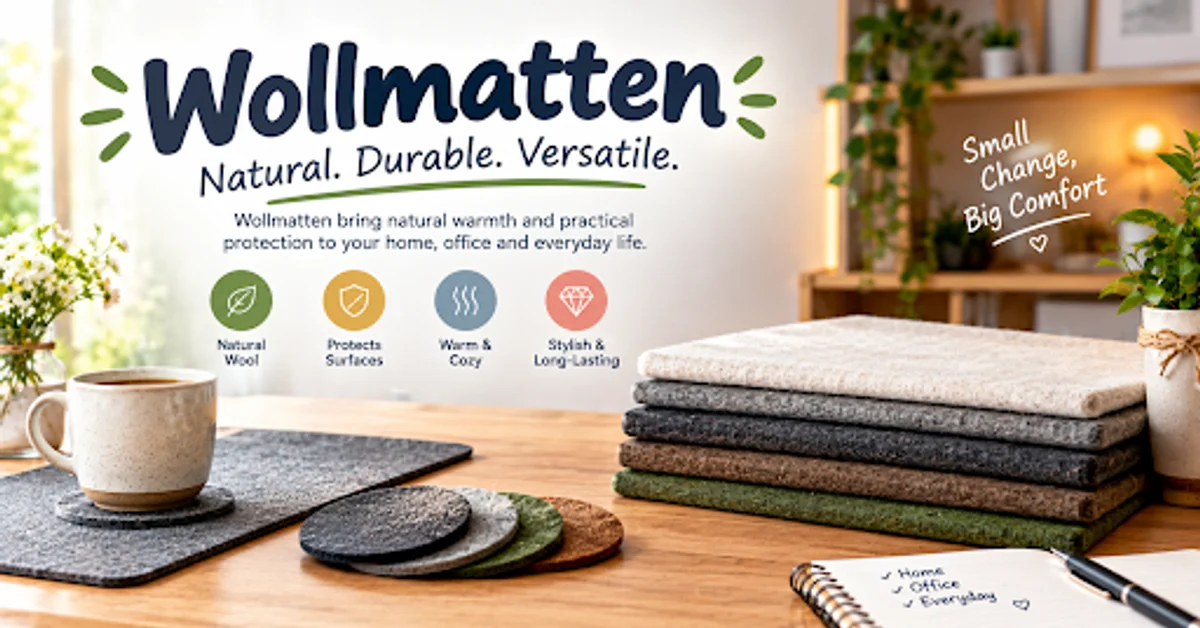
Wollmatten are wool mats made primarily from natural sheep wool. The German term is commonly used for wool mats in different forms, including comfortable floor coverings and specialized insulation products. Their appeal comes from the remarkable structure of wool fiber, which can trap air, absorb moisture vapor, provide warmth, and help reduce unwanted sound.
Today, people interested in natural materials are increasingly exploring wool mats, sheep wool insulation, and other natural alternatives to synthetic products. However, choosing the right Wollmatten requires understanding their intended purpose. A decorative wool floor mat and a building-insulation mat may both contain wool, but they are designed, tested, and installed differently.
This guide explains what are Wollmatten, how they work, where they are used, their environmental characteristics, limitations, maintenance requirements, and the factors worth checking before purchase.
Related: Pantagonar: Meaning, Benefits, Uses and Safety
What Are Wollmatten?
Wollmatten Meaning and Definition
The Wollmatten meaning is straightforward: Wollmatten is a German term referring to wool mats. It is a general descriptive term rather than necessarily the name of a particular company, patented product, or brand.
Depending on context, German wool mats can describe floor coverings made from sheep wool or mats designed for insulation. Both applications take advantage of properties naturally associated with wool, including softness, elasticity, moisture interaction, and its ability to hold air within its fiber structure.
The word can therefore appear in discussions about home decoration, flooring, construction, insulation, acoustic treatment, and sustainable materials. Understanding the context is important before assuming that every Wollmatte has the same specifications.
What Are Wollmatten Made From?
Many Wollmatten are made from sheep fleece that has been cleaned, processed, and formed into a mat. The percentage of wool can vary considerably. Some products are close to pure wool, while others contain wool blends, binders, backing materials, or synthetic fibers.
A floor product might include a decorative surface and wool backing, while an insulation product may be manufactured as a batt, roll, or flexible mat. The construction determines how the material performs and where it can safely be used.
When comparing products, check the stated wool content rather than assuming that a product marketed as natural wool contains only wool. Product specifications provide a more reliable picture of its composition and intended application.
How Do Wollmatten Work?
Wool Fibers and Trapped Air
The useful characteristics of Wollmatten begin with the structure of natural wool fibers. Wool is naturally crimped, meaning its fibers have a wave-like form. These crimped wool fibers create numerous small spaces within the material.
Those spaces can hold air. Since still air is relatively poor at transferring heat compared with many solid materials, the trapped air contributes to wool’s insulating ability. This helps explain why a wool mat can feel pleasantly warm underfoot and why specially manufactured sheep-wool insulation can slow heat transfer in a building.
Wool is also resilient. Its natural elasticity allows fibers to recover after compression, although performance and recovery depend on the product’s density, construction, and conditions of use.
Thermal and Acoustic Properties
Wool thermal insulation works by slowing the movement of heat through the material. In building applications, properly designed wool insulation can contribute to a building’s overall thermal performance and help reduce unwanted heat transfer.
Wool can also provide acoustic insulation because its fibrous structure can absorb some sound energy. A wool floor covering may soften footsteps and reduce reflections, while insulation placed within an appropriate building assembly can contribute to acoustic control.
Neither property should be considered in isolation. Actual performance depends on thickness, density, installation, surrounding materials, and the complete floor, wall, ceiling, or roof construction.
Key Benefits of Wollmatten
Warmth, Comfort, and Sound Absorption
One of the easiest benefits to notice with wool floor mats is comfort. A well-made wool mat provides a softer surface than bare tile, stone, or many other hard flooring materials. It can also create a warmer sensation underfoot, making it particularly appealing in bedrooms and living areas.
Wool mats can contribute to a quieter-feeling room as well. Their irregular fibers can absorb some sound, helping reduce reflections and the sharp impact of footsteps. This makes wool mats for sound absorption useful in offices, reading areas, bedrooms, studios, and other spaces where acoustic comfort matters.
Moisture Regulation and Breathability
Wool is a naturally breathable material that can interact with water vapor in the surrounding air. It can absorb and later release moisture vapor as environmental conditions change. This characteristic is often described as moisture regulation.
However, moisture regulation does not mean waterproofing. A wool mat can tolerate normal changes in atmospheric humidity, but prolonged exposure to liquid water can create problems. Proper ventilation and quick drying remain important.
For building insulation, moisture behavior must be considered as part of the entire construction system. Vapor movement, ventilation, drainage, and local climate all influence whether an insulation assembly performs properly.
Wollmatten as Floor Mats
Common Uses in Homes and Offices
Wool floor mats can add warmth, texture, and visual interest to many interiors. Common applications include bedrooms, living rooms, hallways, home offices, reading corners, children’s rooms, hotels, reception spaces, and relaxation areas.
Wool mats for bedrooms can be particularly comfortable beside a bed, where a soft surface is pleasant under bare feet. In living rooms, a larger natural wool mat can help define a seating area while adding acoustic softness.
Because wool is a natural fiber, it can also complement interiors built around wood, stone, cotton, linen, and other natural materials. Available colors, patterns, textures, and thicknesses vary widely.
Choosing the Right Wool Floor Mat
The best floor mat depends on traffic, location, dimensions, and desired comfort. A busy hallway needs a durable, dense construction, while a bedroom may prioritize softness.
Measure the available area before purchasing. Thickness is also important because an unusually thick mat can interfere with doors or sit awkwardly beneath furniture.
Look at construction as well as appearance. Pure wool mats can offer the characteristics associated with wool, while blended products may combine wool with other fibers for specific performance or cost considerations.
Wollmatten for Building Insulation
Walls, Floors, Ceilings, and Roofs
Wool insulation mats are manufactured specifically for construction applications. Sheep wool insulation mats may be available in rolls, batts, or flexible sections designed to fit particular building cavities.
Depending on the product and building design, sheep-wool insulation can be used in walls, floors, ceilings, lofts, and roof spaces. It may be considered for new construction or renovation projects.
Its flexibility can make certain wool insulation products convenient to fit around irregular areas. Nevertheless, insulation should not simply be pushed into a cavity without regard to the manufacturer’s installation requirements.
Thermal Performance and Installation
A quality wool insulation material can contribute to thermal insulation by slowing heat transfer through a building assembly. Its effectiveness depends on thickness, density, thermal conductivity, installation quality, and the construction surrounding it.
Correct installation is essential. Excessive compression, gaps, incorrect moisture control, or unsuitable placement can reduce expected performance. Building projects must also comply with applicable requirements for thermal performance, fire safety, moisture management, and other construction standards.
For this reason, insulation products should be selected according to technical documentation rather than appearance alone.
Are Wollmatten Environmentally Friendly?
Renewable and Biodegradable Wool
Wool has an important sustainability advantage: sheep naturally regrow their fleece. This makes wool a renewable fiber when produced through responsible systems.
Some wool products are also biodegradable under suitable environmental conditions. This means certain biodegradable wool mats may have an end-of-life advantage over products made entirely from persistent synthetic fibers.
Long service life is another consideration. A durable wool mat that remains useful for many years may reduce the frequency of replacement.
Environmental Factors to Consider
Calling every wool product completely eco-friendly would be too simplistic. The environmental footprint of a Wollmatte can be affected by sheep farming, land management, processing, washing, dyes, transportation, chemical treatments, backing materials, manufacturing, and disposal.
A product containing substantial synthetic components may have different end-of-life characteristics from a predominantly natural wool product. Consumers interested in sustainable insulation or eco-friendly flooring should therefore examine the complete product.
Certifications, manufacturing information, fiber composition, durability, and responsible sourcing can provide useful information when available.
Wollmatten vs. Synthetic Mats
Differences in Comfort and Performance
Wool and synthetic mats can both serve practical purposes, but their characteristics differ. Wool generally provides a naturally soft feel, useful thermal properties, moisture interaction, and sound absorption.
Synthetic mats can offer advantages such as lower purchase prices, simple cleaning, and resistance to particular types of moisture or staining, depending on the material.
Therefore, the right choice depends on the environment. Natural wool mats may appeal to people prioritizing warmth, comfort, natural fibers, and acoustic qualities, while synthetic products can be practical where low cost or easy washing is the primary concern.
Cost, Durability, and Maintenance
High-quality wool products can have a higher initial price than some synthetic alternatives. However, price should be considered alongside construction quality and expected lifespan.
Durability depends on fiber quality, density, traffic, moisture, cleaning, and general care. A well-maintained wool mat can remain attractive and functional for many years.
Maintenance is also part of the overall cost. Wool generally benefits from appropriate cleaning methods rather than aggressive chemicals or excessive water.
Limitations and Things to Consider
Moisture, Pests, and Fire Protection
Wollmatten are not waterproof or automatically mold-proof. Prolonged moisture can damage wool products and create conditions that support unwanted biological growth.
Natural wool can also be vulnerable to certain textile pests. Some insulation products receive treatments intended to improve pest resistance or other performance characteristics.
Wool should not be described as fireproof. Building insulation must meet the applicable fire-performance requirements, and treatments vary between manufacturers. Always check the technical documentation for the exact product.
Allergies and Product Treatments
Wool products may be suitable for many indoor environments, but individual sensitivities vary. It is also important to consider more than the wool itself.
Dyes, adhesives, backing materials, binders, finishes, dust, and protective treatments can affect the characteristics of a finished mat. Buyers with specific sensitivities should examine the complete material specification.
Regular cleaning is helpful because dust and other particles can accumulate in any textile surface.
How to Clean and Maintain Wollmatten
Cleaning and Stain Removal
Regular vacuuming helps prevent dirt from becoming deeply embedded in wool fibers. Use an attachment and setting appropriate for wool and follow the manufacturer’s recommendations.
When liquid spills occur, blot them gently with a clean cloth rather than rubbing aggressively. Rubbing can spread the stain and place unnecessary stress on the fibers.
For deeper cleaning, use a suitable wool-safe product or professional cleaning service when recommended. Avoid soaking a wool mat because excessive moisture can affect its shape, backing, and drying time.
Proper Storage and Protection
Before storage, make sure the Wollmatte is completely clean and dry. Larger mats are generally better rolled than tightly folded because sharp folds can create persistent creases.
Keep stored wool products in a clean, dry environment protected from excessive humidity and pests. Long exposure to strong direct sunlight can also contribute to fading.
Following the manufacturer’s care instructions is always preferable to applying a generic cleaning method.
How to Choose the Right Wollmatten
Factors to Check Before Buying
First, determine whether you need a wool floor mat or wool insulation mats. These products should not be treated as interchangeable.
For flooring, consider wool content, density, thickness, dimensions, backing, traffic level, appearance, and cleaning requirements. For insulation, examine thermal performance, thickness, density, fire classification, pest treatment, moisture requirements, and installation instructions.
Also consider whether the product is pure wool or a wool blend. A blend is not necessarily inferior; it simply has a different composition and performance profile.
Are Wollmatten Worth It?
Wollmatten can be a worthwhile choice when warmth, comfort, natural materials, sound absorption, and durability are important priorities. Their natural characteristics make them versatile for both interior flooring and specialized insulation applications.
However, there is no universal best mat for every situation. A synthetic alternative may be more practical where very low cost, easy washing, or high water resistance is essential.
The smartest purchase is one that matches the product’s actual specifications to the intended environment.
Related: Courseto: A Complete Guide to Online Learning
Frequently Asked Questions
What Does Wollmatten Mean?
Wollmatten is a German term meaning wool mats. Depending on context, it can refer to wool floor mats or sheep-wool insulation mats used in buildings.
How Long Do Wollmatten Last?
There is no universal lifespan for Wollmatten. Durability depends on wool quality, construction, traffic, moisture exposure, sunlight, cleaning, and maintenance. A high-quality wool mat that receives appropriate care can remain useful for many years.
Are Wollmatten Good for Warmth?
Yes. Wool fibers naturally create spaces that hold air, helping slow heat transfer. A floor mat can make a surface feel warmer, while properly specified wool insulation can contribute to a building’s thermal performance.
Can Wollmatten Control Moisture?
Wool can absorb and release water vapor as humidity changes. This helps explain its moisture-regulating behavior, but it does not make Wollmatten waterproof or suitable for prolonged wet conditions.
Are Wollmatten Good for Sound Absorption?
Wool’s fibrous structure can absorb some sound energy. Floor mats can help soften footsteps and reflections, while wool insulation can contribute to acoustic insulation when incorporated into an appropriate building assembly.
Summary
Wollmatten bring together several valuable characteristics of sheep wool in a practical form. Whether used as wool mats for home interiors or as specialized insulation, their natural wool fiber structure can provide warmth, comfort, moisture interaction, and useful acoustic performance.
Their environmental appeal is also significant because wool is a renewable natural fiber and some wool products can be biodegradable. Still, responsible selection means looking beyond marketing claims. Product composition, treatments, durability, maintenance, moisture exposure, fire performance, and intended application all deserve attention.
For anyone exploring natural flooring or sheep wool insulation, Wollmatten offer an interesting combination of traditional material qualities and modern applications. The key is simple: choose a product designed for the job, follow its technical and care instructions, and consider the complete product rather than focusing on wool alone.