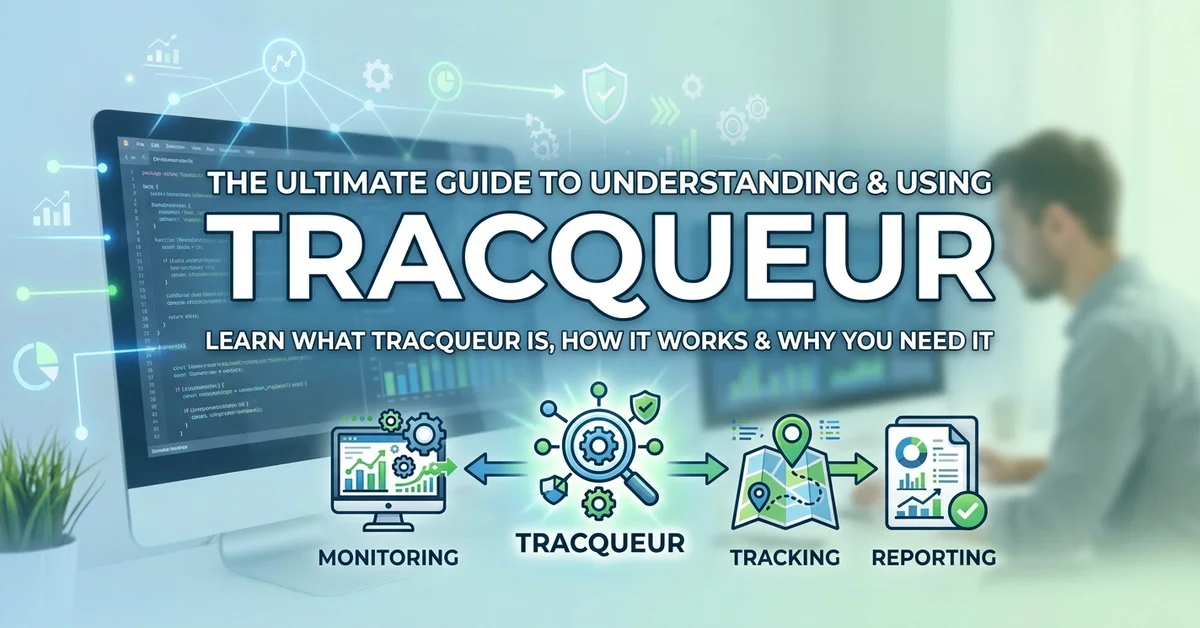
Tracqueur is a tracking device or system used to locate objects, monitor movement, or record activity. Depending on the context, it may refer to a GPS tracker for a car, a Bluetooth tag for keys or bags, a fitness watch, a pet tracker, or digital tracking software.
Modern tracking technology makes everyday tasks more convenient. It can help travelers find luggage, families locate compatible devices, businesses manage equipment, and fitness enthusiasts monitor their progress. However, different trackers use different technologies, and their capabilities vary. Understanding how they work, what they can realistically do, and how they handle personal information helps you choose a suitable solution with confidence.
RELATED: Rolerek: Sustainable Smart Home Technology
What Is a Tracqueur?
The term Tracqueur is commonly associated with a tracker or tracking tool. It can describe a device or software system designed to collect information about location, movement, or activity. The word itself does not establish a particular manufacturer, technical standard, or product, so its precise meaning depends on the context in which it appears.
A Tracqueur tracking device may use GPS, Bluetooth, wireless networks, or built-in sensors to gather information. For example, a vehicle tracker can report a car’s location, while a fitness tracker records movement and activity. These technologies help users turn information into practical decisions rather than relying entirely on memory or guesswork.
Tracking has become more common because smartphones, connected devices, and mobile applications make collecting and viewing information easier. The growth of the Internet of Things (IoT), which connects devices that exchange data, has expanded tracking into homes, workplaces, transport, and personal fitness.
How Does Tracqueur Technology Work?
Tracqueur technology follows a basic process: a device collects information, processes or transmits it, and presents the results through an application or digital interface. The exact process depends on the purpose of the tracker. Some devices record movement locally, while others send regular updates to a remote account.
GPS, Bluetooth, Wi-Fi, and cellular networks perform different functions. GPS uses satellite signals to calculate a receiver’s position. Bluetooth connects nearby devices over short distances. Wi-Fi can support location estimation, particularly indoors, while cellular networks can transmit tracking information and sometimes help estimate a device’s position.
How Tracking Data Is Collected and Displayed
A tracking device may contain a GPS receiver, motion sensor, wireless radio, or other electronic components. The collected information can include coordinates, movement, timestamps, steps, or other activity measurements. Compatible software converts the data into a map, graph, notification, or report that users can understand.
Mobile applications and online platforms make this information easier to access. Depending on the product, users may view a current location, check historical routes, receive a boundary alert, or review activity trends. However, a device’s ability to collect information is different from its ability to transmit it. A GPS receiver can calculate a position without independently providing an internet connection, but remote monitoring usually requires another communication method.
Different Types of Tracqueur Devices
There are several types of tracking devices, each designed for a particular task. Choosing the right type depends on whether you want to find a nearby object, monitor a moving vehicle, measure physical activity, or manage business equipment. Understanding these differences prevents unnecessary spending and unrealistic expectations.
1. GPS Trackers for Vehicles and Assets
A GPS tracker uses the Global Positioning System to calculate its position from satellite signals. GPS is one component of the broabder Global Navigation Satellite System (GNSS) landscape. Other satellite navigation systems include Galileo, operated by the European Union, and GLONASS, operated by Russia. Some receivers can use multiple satellite constellations to support positioning.
A vehicle tracking device can report a car’s location, record route history, and provide alerts when supported by its software. Businesses may use these features for fleet management, while individuals may use a car GPS tracker to monitor their own vehicles. Many live-tracking products also require mobile connectivity and a service plan, so buyers should check coverage, update frequency, installation requirements, and fees.
2. Bluetooth Trackers for Keys, Bags, and Personal Items
A Bluetooth tracker is a small wireless tag designed to help users find everyday belongings. It can be attached to keys, luggage, wallets, backpacks, or other items that are easily misplaced. When the tag is within Bluetooth range, a compatible phone may show its proximity or trigger a sound.
Products such as Apple AirTag, Tile trackers, and Samsung SmartTag illustrate this category. Apple Find My and Google’s Find Hub can help locate compatible devices and supported tracking accessories within their respective ecosystems. Some systems use nearby participating devices to report a lost item’s approximate location, but availability depends on product compatibility and network coverage. A Bluetooth tag should not automatically be treated as a standalone GPS tracker.
3. Fitness Trackers and Wearable Devices
Fitness trackers are examples of wearable technology designed to measure movement and selected body-related signals. Depending on the model, a fitness tracker may count steps, estimate distance, record workouts, monitor heart rate, and provide sleep-related estimates. Garmin and Fitbit offer products in this general category, although features vary by device.
These tools can help users understand their daily routines. Someone might notice that they move less during long working hours or become more consistent with exercise after reviewing weekly activity reports. Nevertheless, readings can be affected by device placement, sensor design, and individual differences. Fitness trackers are useful for general monitoring, but they do not replace medical tests or professional diagnosis.
4. Pet Trackers for Animal Safety
A pet tracking device can help an owner locate a dog or cat, depending on its technology and coverage. GPS pet collars are particularly useful for outdoor location monitoring, while Bluetooth-based products may help locate an animal or accessory over a shorter distance. Some connected devices also provide movement summaries or safe-zone alerts.
Before buying a pet tracker, consider the animal’s size, collar comfort, battery life, water resistance, and the availability of mobile coverage. Geofencing can notify an owner when a tracked device crosses a virtual boundary, but alerts may be delayed or unavailable when connectivity fails. A tracker is an additional safety tool, not a substitute for identification tags, secure fencing, and responsible supervision.
5. Digital Tracking Software and Online Tools
Not every Tracqueur is a physical device. Digital tracking software can record activity within websites, mobile applications, or computer systems. Website analytics tools, for example, measure visits, page interactions, referral sources, and other events that help website owners understand how visitors use their services.
Online tracking technology may use cookies, device identifiers, or similar mechanisms, depending on the system and the user’s settings. Businesses can use this information to improve navigation and identify technical problems. Responsible systems explain what they collect, limit unnecessary data collection, and provide appropriate privacy controls.
Common Uses of Tracqueur in Everyday Life
Personal tracking can make everyday activities more manageable. Travelers may use item-finding tags to locate luggage, while drivers can use GPS navigation and compatible tracking systems to review routes. People who frequently misplace their keys may benefit from a Bluetooth key finder rather than a more expensive vehicle-style tracking unit.
Businesses use an asset tracking system to monitor tools, stock, machinery, and delivery vehicles. Fitness enthusiasts can review activity data, and pet owners may use compatible devices to support animal safety. Each application serves a different purpose, so the best solution is the one that provides useful information without adding unnecessary complexity.
Key Benefits of Using a Tracqueur
One of the main tracking technology benefits is improved awareness. Instead of guessing where an item was last seen, users may be able to check a compatible tracking application. Vehicle location data can support route planning, and activity records can help people recognize changes in their routines.
Tracking systems can also save time and support better organization. A business may reduce the time employees spend searching for equipment, while a fleet manager can review vehicle movements and plan operations more efficiently. However, tracking does not guarantee that an item will be recovered or that theft will be prevented. It provides information that can help users respond more effectively.
Better Decisions Through Data
Tracking data can reveal patterns that are difficult to recognize from memory alone. A runner can compare workout records, and a business can examine equipment usage to improve scheduling. These insights become more valuable when the information is accurate, relevant, and collected consistently.
The goal should be practical improvement rather than collecting data for its own sake. Users should choose a tracker that answers a specific question and offers useful features without unnecessary expense or excessive monitoring.
Limitations and Challenges of Tracking Technology
No tracking device works perfectly in every situation. GPS accuracy can decrease indoors, underground, or near buildings that obstruct or reflect satellite signals. GPS.gov explains that positioning performance depends on factors such as satellite geometry, signal blockage, atmospheric conditions, and receiver quality.
GPS.gov’s explanation of positioning accuracy
provides further technical detail.
Bluetooth has a more limited direct range, while cellular-based tracking depends on network availability. Battery life also varies according to device design, update frequency, signal conditions, and usage. A device that sends frequent location updates may consume more power than one that reports less often.
Cost and compatibility are additional concerns. Some trackers require subscriptions, paid applications, or compatible smartphones. Before purchasing, check GPS tracker battery life, charging requirements, replacement batteries, coverage limitations, and whether the tracking network works in your region.
Tracqueur Privacy, Safety, and Security
Tracking technology can involve sensitive information, particularly when it records a person’s location, movements, or daily habits. Users should understand what information a device collects, where it is stored, who can access it, and how long it is retained. These questions are important for personal devices and business tracking systems alike.
Consent matters whenever tracking involves another person. Secretly monitoring a partner, employee, or other individual can violate privacy and may be unlawful, depending on the circumstances and local rules. Employers should explain legitimate workplace monitoring, limit access to authorized personnel, and follow applicable employment and data protection laws.
The European Union’s General Data Protection Regulation (GDPR) establishes principles for relevant personal-data processing, including transparency, purpose limitation, data minimization, and security. Its precise application depends on the circumstances. The European Commission provides an overview of these requirements in its
official data protection guidance.
Practical Steps for Protecting Tracking Data
Use a strong, unique password for tracking accounts and enable multifactor authentication when available. Keep applications updated, review location permissions, and remove access that is no longer necessary. For shared devices, make sure every authorized user understands what information is visible to others.
Businesses should establish clear retention policies and avoid collecting personal information that is unnecessary for their stated purpose. Good security combines suitable technology with transparent policies and responsible behavior.
How to Choose the Right Tracqueur
Start by identifying exactly what you want to track. If you need to locate a vehicle across long distances, a GPS tracking device with appropriate mobile coverage may be suitable. If you want to find keys or a bag nearby, a Bluetooth tag may be simpler and less expensive. For exercise records, choose a wearable with the activity measurements you actually need.
Next, compare practical features. Consider battery life, location accuracy, update frequency, device compatibility, installation, durability, water resistance, and subscription fees. For pet trackers, comfort and weight deserve special attention. For business systems, reporting tools, user permissions, and integration with existing operations may be equally important.
Finally, review the accompanying application and its privacy settings. Check whether location history is stored, whether data can be shared, and how the service handles account deletion. The best Tracqueur is not necessarily the device with the most features; it is the one that reliably meets your needs at a reasonable total cost.
Tracqueur vs. GPS Tracker: What Is the Difference?
The main difference is that Tracqueur is used here as a broad descriptive term for tracking tools, while a GPS tracker refers to a device or system that uses GPS positioning. Tracking can also involve Bluetooth, Wi-Fi, motion sensors, cellular signals, or software-based activity measurement.
For example, a Bluetooth tag may help locate nearby keys without containing a GPS receiver. A fitness tracker may measure movement using internal sensors, while a vehicle tracker may combine GPS positioning with cellular communication. These systems can all support tracking, but they do not provide identical features or levels of location detail.
Understanding this distinction makes product comparisons easier. Rather than assuming every tracker uses satellites or provides live location updates, check the technology, communication method, coverage, and capabilities of the specific device.
Frequently Asked Questions About Tracqueur
What Does Tracqueur Mean?
Tracqueur is a term associated with a tracker or tracking tool. Depending on the context, it may refer to a GPS device, Bluetooth tag, fitness wearable, pet tracker, asset monitoring system, or digital tracking software. The word alone does not confirm a particular brand or product.
How Does a Tracqueur Work?
A Tracqueur collects information using technologies such as GPS, Bluetooth, Wi-Fi, or motion sensors. Depending on its design, it processes the information locally or sends it to a compatible application. The app may then display a location, activity record, alert, or report.
Can a Tracqueur Work Without the Internet?
Yes, some tracking functions work without an internet connection. A GPS receiver can calculate its position from satellite signals, and a Bluetooth tag can communicate locally with a compatible phone. However, remote tracking, cloud-based history, and live updates often require an additional communication connection.
Is a Tracqueur the Same as a GPS Tracker?
No. A GPS tracker is one specific type of tracking device. Tracqueur, as used in this article, is a broader term that can include GPS devices, Bluetooth tags, wearables, and digital tracking systems.
Are Tracking Devices Safe and Legal to Use?
Tracking devices can be useful when used responsibly for legitimate purposes, such as locating your belongings or monitoring your own vehicle. However, tracking another person without appropriate consent or legal authority may violate privacy laws. Follow local requirements, secure tracking accounts, and review the manufacturer’s privacy policies.
Summary
Tracqueur represents a broad concept connected with modern tracking technology. Depending on the application, it may involve GPS navigation, Bluetooth item finding, fitness monitoring, pet location, business asset management, or digital analytics. Each type offers different capabilities, costs, and limitations.
The smartest approach is to identify your needs, compare technologies, check compatibility, and consider privacy before choosing a solution. A well-matched tracking device can improve convenience, organization, and awareness when its capabilities are understood and its data is handled responsibly.

[…] Related: Tracqueur: Meaning, Uses, Types, and How It Works […]