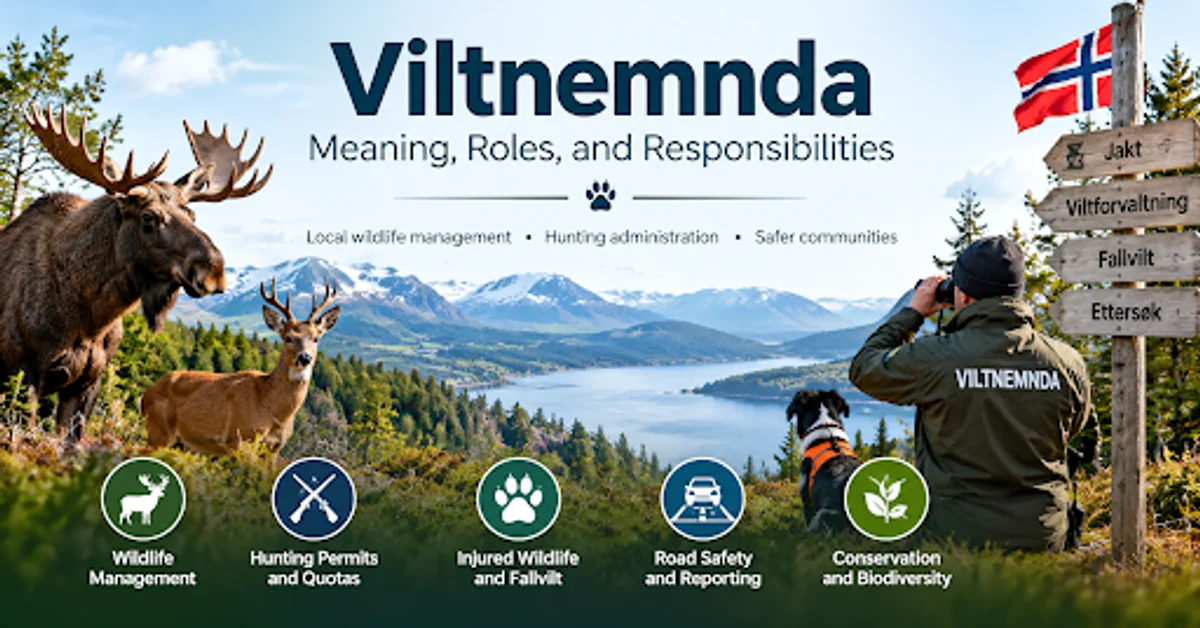
Viltnemnda is a Norwegian term that translates to “the wildlife committee” or “the wildlife board.” It is associated with local wildlife management, hunting administration, and practical issues involving wild animals in Norway. The word combines vilt, meaning wildlife or game, and nemnd, meaning a committee or official panel. The definite form, viltnemnda, therefore means “the wildlife committee.”
The term does not refer to one national organization responsible for every wildlife matter across Norway. Instead, it describes a traditional form of local wildlife administration whose structure and responsibilities can differ between municipalities. Some municipalities may use a formal Viltnemnd, while others assign related duties to municipal employees, wildlife contacts, or specialized tracking teams.
Norway has extensive forests, mountains, farmland, and rural communities where people regularly encounter wildlife. Managing these environments requires cooperation between public authorities, landowners, hunters, residents, and trained wildlife personnel. Viltnemnda-related services help connect local knowledge with decisions about wildlife populations, animal welfare, and public safety.
Understanding Viltnemnda is especially useful for people searching for help with injured deer, wildlife road accidents, or municipal hunting rules. It also helps explain how Norwegian wildlife management balances the needs of local communities with responsible care for wild animals and their habitats.
Related: Evırı: Meaning, Origin, and Translation Explained
History and Evolution of Viltnemnda
How Local Wildlife Committees Developed
Viltnemnda has historical roots in Norway’s system of local wildlife administration. Municipal wildlife committees traditionally helped organize responsibilities involving game populations, hunting, and wildlife-related incidents. Their local knowledge made it possible to consider regional conditions instead of applying identical practical arrangements everywhere.
Over time, the organization of these duties evolved. Some municipalities continued using established committees, while others integrated wildlife management into broader administrative services. As a result, the name Viltnemnda remains useful when researching Norwegian wildlife administration, even though the actual organization responsible for a particular task may have a different name.
Changes in Norwegian Wildlife Laws
Norwegian wildlife management operates under national legislation, regulations, and administrative decisions. Historically, the Viltloven was an important law governing hunting and wildlife matters. Norway introduced a replacement framework through Viltressursloven, the Act relating to hunting, trapping, and the culling of wildlife. The new law entered into force on July 1, 2026, replacing the former Wildlife Act.
This change makes it important to use current legal information when discussing Viltnemnda legal responsibilities. The name of a local committee does not, by itself, establish its legal powers. Anyone dealing with hunting permissions, damage-control decisions, or an injured animal should check current guidance from the relevant municipality and the responsible Norwegian authorities.
How Viltnemnda Works in Norway
Municipal Responsibilities and Organization
Norwegian municipalities play an important role in viltforvaltning, the Norwegian term for wildlife management. Depending on local arrangements, municipal responsibilities can include managing certain hunting permissions, collecting wildlife information, responding to animal-related incidents, and coordinating local services. A formal Viltnemnd may support this work, but the municipality’s actual authority depends on applicable law and delegated responsibilities.
The Norwegian Environment Agency provides national guidance on environmental and wildlife matters, while the Norwegian Agriculture Agency has important responsibilities relating to hunting administration and the management of huntable game. Local authorities work within this broader framework. This combination of national rules and local knowledge helps municipalities respond to the wildlife conditions in their areas.
Cooperation With Wildlife Authorities and Police
Viltnemnda-related work often involves cooperation among municipal employees, police officers, trained wildlife trackers, hunters, and landowners. Each group has a different role. Police may receive reports about road collisions and manage immediate safety concerns, while local wildlife personnel coordinate the appropriate response to an injured animal.
This cooperation makes wildlife accident reporting easier for residents. Instead of trying to identify an individual tracker, a driver can report an incident through the appropriate official channel. The relevant authorities can then coordinate a search, assess the situation, and record the outcome where required.
Main Responsibilities of Viltnemnda
Wildlife Population and Deer Management
One of the major areas associated with Viltnemnda is wildlife population management. In Norway, hjortevilt refers to a group of deer species that includes elg (moose), hjort (red deer), rådyr (roe deer), and villrein (wild reindeer). Their management requires information about population trends, habitat conditions, hunting activity, and interactions with people.
A municipality may use wildlife population data, hunting reports, and records of animals killed in accidents to support management decisions. These sources help authorities understand local pressures and identify potential concerns, such as repeated road collisions or damage to forests and agricultural land. The aim is sustainable wildlife management, not simply increasing or reducing animal numbers.
Hunting Permits, Quotas, and Management Plans
Viltnemnda and related municipal services may be involved in local hunting administration. Depending on the species and the applicable rules, responsibilities can include approving hunting areas, assigning harvest permissions, reviewing management plans, and receiving hunting reports. The exact process depends on national regulations and the municipality’s delegated authority.
A bestandsplan is a population management plan used to guide wildlife management over time. A fellingstillatelse is a permit authorizing the harvest of specified animals under the relevant rules. The Landbruksdirektoratet explains how municipalities assign permits for moose, red deer, and roe deer through the Hjorteviltregisteret.
Hunters must follow the conditions of their permits, the rules for the approved hunting area, and all applicable hunting regulations.
Viltnemnda and Injured Wildlife
How Injured Animals Are Reported and Tracked
People may encounter injured wild animals after a vehicle collision, a hunting incident, or an accident involving a fence. An injured moose or deer can be unpredictable, so members of the public should not approach, chase, or attempt to capture it. Keeping a safe distance protects people and helps prevent further disturbance to the animal.
The appropriate response is to contact the relevant authorities and provide clear information about the animal’s location, condition, and direction of travel. Local wildlife services can assess whether a search is necessary and coordinate trained personnel. Prompt, accurate reporting can improve the chances of locating an injured animal and reducing unnecessary suffering.
The Role of Ettersøksjegere and Tracking Dogs
Ettersøk means a search or tracking operation, often involving an injured animal that has moved away from the place where it was hurt. An ettersøksjeger is a trained tracker who searches for wounded wildlife, while an ettersøkshund is a tracking dog used to help locate the animal. These teams may work after road collisions or hunting-related injuries.
Tracking requires suitable training, coordination, and respect for safety procedures. Members of the public should avoid following the animal or walking through the area unnecessarily, because disturbance can make the search more difficult. Depending on the findings, trained personnel and the responsible authorities determine the appropriate next steps under the applicable rules.
Understanding Fallvilt and Wildlife Accidents
What Does Fallvilt Mean in Norway?
Fallvilt is an important term in Norwegian wildlife administration. It commonly refers to wild animals that are found dead or are lost outside ordinary legal hunting, trapping, or authorized culling. Records may include animals killed in road or railway collisions, animals that die from illness or injury, and animals that must be put down for welfare or safety reasons.
Fallvilt is therefore broader than roadkill alone. Information about these incidents can help authorities identify accident patterns, monitor wildlife populations, and understand the causes and outcomes of animal injuries. Norway’s Hjorteviltregisteret contains hunting information and records of selected fallvilt cases, allowing users to explore data by species, area, and other categories.
What to Do After Hitting a Moose or Deer
A wildlife collision, known in Norwegian as viltpåkjørsel, requires a calm and safety-focused response. Stop in a safe location, switch on your hazard lights, and check whether anyone needs medical assistance. In Norway, call 113 for urgent medical emergencies. For a wildlife collision or other police assistance, contact the police on 02800, unless an immediate emergency requires the emergency number 112.
Tell the authorities where the collision occurred, which road you were travelling on, your direction of travel, and what animal was involved. If the animal runs away, identify the point where it left the road, but do not follow it into the forest. Stay away from injured wildlife and follow instructions from the police or local wildlife team.
Hunting Permits and Wildlife Damage Control
Understanding Fellingstillatelse and Skadefelling
A fellingstillatelse authorizes the harvesting of animals within the conditions specified by the relevant rules. It is not the same as a hunter’s personal qualifications or hunting registration. For species such as moose, red deer, and roe deer, permits are linked to approved hunting areas and applicable management arrangements.
A skadefellingstillatelse relates to damage-control culling. It may be considered in certain situations involving wildlife-related damage or other qualifying concerns, but it is not automatic permission to kill an animal. The authority responsible for a decision depends on the species, the circumstances, and the law in force. Anyone considering such a request should contact the appropriate authority and check the current requirements.
Managing Wildlife Conflicts With People
Wildlife can sometimes damage crops, gardens, young trees, or commercial forests. Animals near roads and populated areas may also create safety concerns. Local wildlife administration helps assess these issues and identify suitable responses based on the type of animal, the extent of the problem, and the relevant regulations.
Possible responses may include monitoring, practical preventive measures, habitat management, or authorized culling when the legal conditions are met. The aim is to address genuine concerns while considering animal welfare, biodiversity, and the interests of landowners and residents. Responsible wildlife damage control seeks a workable balance rather than treating wildlife as a problem to eliminate.
Important Norwegian Wildlife Terms
Viltnemnd, Viltforvaltning, and Viltpåkjørsel
Understanding a few Norwegian terms makes it easier to find the correct information. Viltnemnd means a wildlife committee, while viltnemnda means “the wildlife committee.” Viltforvaltning refers to wildlife management, including administrative decisions, population monitoring, and the management of hunting and wildlife-related incidents.
Another useful term is viltpåkjørsel, which means a wildlife-vehicle collision. People searching for help after hitting an animal may find information under this term rather than Viltnemnda. Similarly, fallviltgruppe refers to a local team dealing with relevant injured, dead, or otherwise affected wildlife cases, although the team’s precise duties vary by municipality.
Hjorteviltregisteret, Vald, and Ettersøk
The Hjorteviltregisteret is a national database containing information about hunting, deer populations, and selected fallvilt incidents. It supports wildlife monitoring by bringing together records that help authorities and other users understand population trends, harvest figures, and wildlife accidents. Some information is publicly available, while particular recording functions require authorized access.
A vald is an approved hunting management area, and a bestandsplan is a population management plan. Ettersøk, meanwhile, describes a tracking search for an animal, often after an injury. These terms are useful when reading municipal guidance, hunting information, and official wildlife reports in Norway.
Why Viltnemnda Varies Between Municipalities
Local Wildlife Committees and Alternative Services
Not every Norwegian municipality organizes its wildlife responsibilities in the same way. Some may retain a formal Viltnemnd, while others manage the work through municipal staff, a wildlife contact, a fallviltgruppe, or trained tracking teams. These arrangements reflect local administrative choices and the wildlife challenges each area faces.
For this reason, Viltnemnda should be understood as a term associated with local wildlife management rather than the name of a standardized service found everywhere. The responsibilities of a particular committee or team depend on its official mandate and the applicable regulations. Checking the local arrangement is more reliable than assuming every municipality follows the same structure.
How to Find Your Municipality’s Wildlife Contact
The simplest approach is to visit the official website of the relevant Norwegian municipality and search for terms such as viltnemnd, fallvilt, viltkontakt, viltpåkjørsel, or ettersøk. These terms can help locate contact details for wildlife incidents, hunting administration, and local management services.
If the matter involves a road collision, reporting it to the police is an appropriate starting point. For questions about permits, wildlife damage, or local procedures, the municipality can explain which department or authority is responsible. Always confirm current contact details and instructions, especially when dealing with an injured animal or an urgent safety concern.
Why Viltnemnda Matters for Wildlife Conservation
Road Safety, Animal Welfare, and Biodiversity
Viltnemnda-related services contribute to wildlife conservation in Norway by connecting local knowledge with practical action. Road accidents involving moose and deer can threaten drivers and animals alike. Prompt reporting and trained tracking operations help authorities investigate incidents and determine what should happen next.
Animal welfare is equally important. When an injured animal is reported quickly, trained personnel can assess the situation and respond appropriately. Records from wildlife monitoring systems also help reveal recurring accident locations and other patterns. Combined with habitat protection and population management, this information supports more informed decisions about wildlife and human safety.
Balancing Hunting, Agriculture, and Wildlife Protection
Sustainable wildlife management must consider several interests at once. Hunters need clear regulations, farmers and forest owners may need help with wildlife damage, and communities need safe roads and healthy ecosystems. Municipal wildlife services help address these concerns within the boundaries of national law.
The Norwegian Environment Agency, the Norwegian Agriculture Agency, municipalities, landowners, and wildlife professionals all contribute in different ways to this wider system. Effective cooperation can support healthy animal populations while reducing avoidable conflict. Ultimately, responsible wildlife management aims to protect biodiversity, respect animal welfare, and help people and wildlife share the landscape more safely.
Related: Koriandri: Health Benefits and Nutrition Facts
Frequently Asked Questions
Is Viltnemnda a National Agency or a Local Committee?
Viltnemnda generally refers to a local wildlife committee or board, not a single national agency. Its structure and duties vary between Norwegian municipalities. Some municipalities use a formal committee, while others assign similar responsibilities to municipal employees or wildlife teams.
Who Should You Contact About Injured Wildlife in Norway?
Keep your distance from the animal and contact the appropriate local wildlife service or police. After a wildlife-vehicle collision, call 02800 to report the incident; call 112 for an immediate police emergency and 113 for urgent medical assistance. Provide the location and details, and allow trained personnel to handle the animal.
What Does Fallvilt Mean?
Fallvilt refers to wildlife found dead or affected outside ordinary legal hunting, trapping, or authorized culling. The term can include animals killed in traffic collisions, animals that die from illness or injury, and animals put down for welfare or safety reasons.
Does Viltnemnda Issue Hunting Permits?
Some hunting-permit responsibilities may be handled by a municipality or delegated local body. The exact process depends on the species, hunting area, and applicable rules. Hunters should consult the municipality and current official guidance before relying on any permit information.
What Is an Ettersøksjeger?
An ettersøksjeger is a trained person who tracks injured or wounded wildlife. The tracker may work with an approved tracking dog, known as an ettersøkshund, to locate an animal and help ensure an appropriate response.
Summary
Viltnemnda is an important term for understanding Norway’s local wildlife management system. Although it translates as “the wildlife committee” or “the wildlife board,” it does not describe one standardized national organization. Its meaning in practice depends on how each municipality organizes its wildlife responsibilities.
From deer management and hunting permits to fallvilt records, injured-animal tracking, and road safety, Viltnemnda-related services connect local communities with responsible wildlife administration. If you need assistance, check your municipality’s official guidance and report wildlife incidents through the proper channels. Understanding the system helps people make informed decisions, protect animal welfare, and contribute to safer coexistence between people and wildlife.