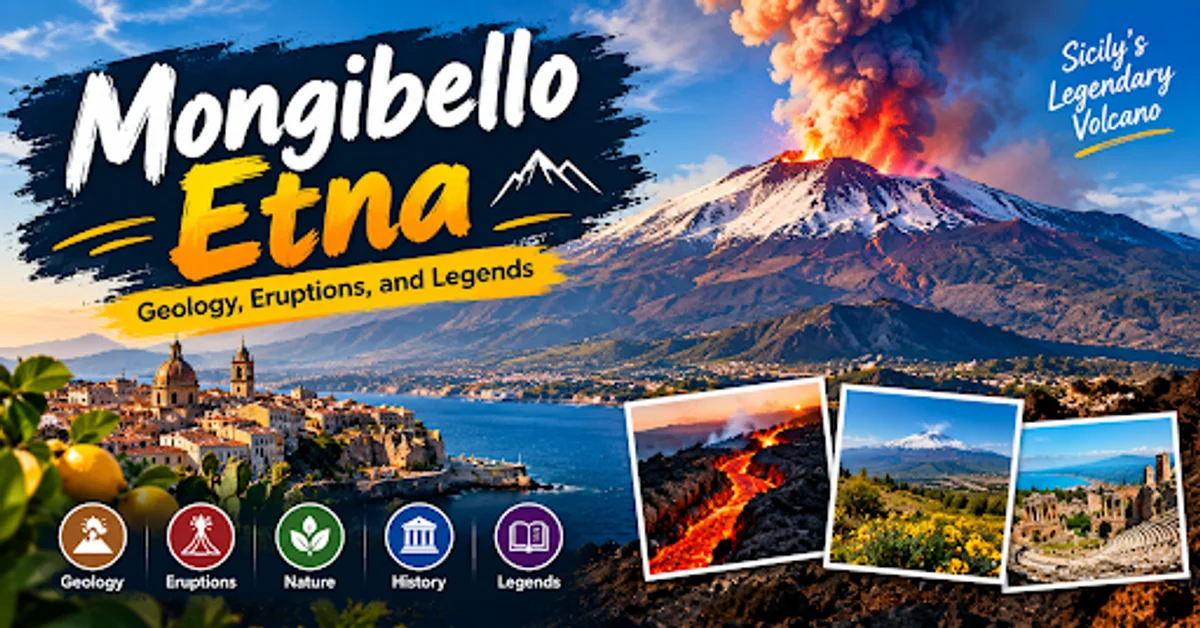
Mongibello Etna is a traditional name associated with Mount Etna, one of the world’s most famous active volcanoes. Located on Sicily’s eastern side, this remarkable natural landmark is known for its impressive volcanic landscape, frequent eruptions, rich ecosystems, and deep cultural connections. The name Mongibello reflects the island’s long history of languages and traditions.
The term is often translated as “mountain of mountains,” although its precise historical usage and linguistic development are more complex than a simple translation suggests. Today, Mongibello Etna is an interesting subject for travelers, history enthusiasts, geologists, and anyone curious about Sicily’s natural heritage.
The name Mongibello is commonly explained through the combination of words meaning “mountain” in Arabic and Latin or related Romance languages. The Arabic word jabal means mountain, while the Latin word mons also means mountain. Their historical linguistic influence helps explain the repeated mountain meaning associated with the name.
This traditional name reflects Sicily’s diverse cultural past, shaped by Greek, Roman, Arab, and other Mediterranean influences. Although Mount Etna is the standard English name, Mongibello remains a meaningful alternative in local traditions and historical references.
Related: Uncuymaza: Meaning, Origin, and Complete Guide
History and Origins of Mongibello Etna
Latin and Arabic Roots of the Name
The Mongibello Etna history reflects centuries of cultural exchange across the Mediterranean. Linguistic references generally connect Mongibello with the Latin word mons, meaning mountain, and the Arabic word jabal or gebel, also meaning mountain. The combination creates a repeated meaning that emphasizes the volcano’s extraordinary size and importance. The Italian linguistic reference Treccani identifies Mongibello as another name for Etna and explains this combined origin.
The name also illustrates how language changes when different communities inhabit the same region. Greek, Latin, Arabic, and Sicilian influences have all contributed to the island’s historical vocabulary. Although the precise history of individual names can be difficult to reconstruct, Mongibello remains a recognizable example of Sicily’s layered linguistic heritage.
Mongibello Etna in Ancient Sicilian History
Mount Etna has influenced life in Sicily for thousands of years. Ancient communities observed its eruptions, developed stories about its mysterious activity, and adapted their lives to the land around it. Historical accounts and geological evidence together reveal a long relationship between people and this powerful natural landmark. UNESCO reports that human records document Etna’s volcanic activity for at least 2,700 years.
The volcano also affected agriculture, settlement, trade, and local traditions. Its fertile volcanic soils supported farming in many areas, while eruptions sometimes threatened homes, roads, and cultivated land. This combination of opportunity and risk helped make Etna a central feature of Sicilian history rather than simply a distant mountain.
Where Is Mongibello Etna Located?
Mount Etna’s Location in Sicily, Italy
Mongibello Etna is located on the eastern coast of Sicily, the largest island in the Mediterranean Sea . Sicily is part of Italy, and Mount Etna rises above the surrounding countryside near the metropolitan area of Catania. Its prominent position makes it visible from many nearby communities when weather conditions are clear.
The Mongibello Etna location is important for both tourism and scientific research. The mountain contains different volcanic zones, including summit craters, older cones, lava fields, and extensive slopes. Its landscapes change with elevation, creating contrasts between cultivated lower ground, forested areas, and exposed volcanic terrain. UNESCO identifies Etna as the highest mountain on a Mediterranean island and recognizes its outstanding geological features.
Nearby Cities, Villages, and Natural Landscapes
Catania is one of the main urban centers associated with Mount Etna. Smaller towns and villages occupy its lower slopes, where residents live alongside orchards, vineyards, roads, and historic buildings. These communities offer visitors opportunities to learn about local food, architecture, and everyday Sicilian life while exploring the surrounding landscape.
One of the volcano’s most striking geological features is Valle del Bove, a large depression on its eastern flank. Its steep walls and extensive volcanic deposits help scientists understand the mountain’s development. The contrast between green countryside and dark volcanic rock also makes this region especially memorable for nature enthusiasts.
Geological Features of Mongibello Etna
Volcanic Structure and Summit Craters
Mongibello Etna is a stratovolcano, a volcanic structure built through successive eruptions that deposit lava, ash, and other volcanic materials. Over long periods, these materials form a complex mountain with steep sections, ridges, craters, and overlapping volcanic cones. Etna’s structure continues to change as new eruptions add material or reshape existing features.
The summit area contains several craters, while additional vents and cones occur along the volcano’s flanks. Their appearance and activity can change over time, making Etna an important natural laboratory for volcanology. Scientists study these features to understand how magma moves underground, how eruptions develop, and how volcanic landscapes evolve.
Lava Flows, Volcanic Rocks, and Landscapes
A lava flow forms when molten rock reaches the surface and moves away from an eruptive opening. As the lava cools, it solidifies into volcanic rock, creating new ground and sometimes covering older vegetation, paths, or structures. Etna’s many lava flows provide a visible record of its changing activity across different periods.
Volcanic ash, cinders, and other deposits also contribute to the mountain’s varied geological formations. Some areas appear dark and rugged, while others support forests, crops, and grassland. Weather, elevation, soil development, and the age of individual lava deposits all influence the landscape. These contrasts make Mongibello Etna geology valuable for researchers and fascinating for visitors.
Eruptions and Volcanic Activity
Famous Eruptions Throughout History
The Mongibello Etna eruption history includes centuries of documented volcanic activity. One particularly significant event began in 1669, when a major eruption produced extensive lava flows that affected communities around the mountain, including areas near Catania. Other eruptions have reshaped the summit and surrounding slopes, demonstrating that Etna is a constantly changing geological system.
Etna’s activity can involve lava fountains, ash emissions, explosions, and lava flowing from summit craters or openings on its flanks. However, not every eruption produces the same effects, and the intensity can vary considerably. Its long history offers scientists valuable evidence about how active volcanoes behave and how communities can prepare for changing conditions.
How Scientists Monitor Mount Etna
Modern volcanic activity monitoring combines several scientific methods. Specialists measure earthquakes, volcanic tremors, ground deformation, gas emissions, and changes in surface activity. These observations help researchers identify changes in the volcano and assess possible developments. No single measurement can predict every eruption with certainty, so scientists examine multiple sources of evidence together.
The Italian National Institute of Geophysics and Volcanology (INGV), including its Etna Observatory, monitors Sicily’s volcanoes and shares information with civil protection authorities. Its surveillance systems operate around the clock, helping officials communicate volcanic events and evaluate potential hazards. Visitors should always follow current local advisories and access restrictions, particularly when summit activity changes.
Cultural and Historical Significance
Mongibello Etna in Sicilian Traditions
Mongibello Etna holds a special place in Sicilian identity because it shapes the island’s scenery, agriculture, history, and regional character. For generations, the volcano has appeared in local stories, poetry, art, and descriptions of the countryside. Its changing summit can inspire wonder, while its presence reminds residents of the powerful natural processes beneath their landscape.
The volcano also contributes to local livelihoods through agriculture, tourism, and scientific education. Communities on its slopes have developed ways to live with its changing environment, although volcanic hazards remain an important consideration. The Mongibello Etna cultural significance therefore comes from both its symbolic importance and its direct influence on everyday life.
Ancient Myths and Legends About Mount Etna
Ancient Greek and Roman traditions connected Mount Etna with powerful gods and supernatural beings. In Greek mythology, the god Hephaestus, associated with metalworking and fire, was linked to a forge beneath the mountain. Roman tradition connected him with Vulcan, the god of fire. Such stories offered imaginative explanations for the smoke, heat, and eruptions that ancient observers witnessed.
Other legends described powerful beings trapped beneath the volcano, whose movements supposedly explained earthquakes and eruptions. These stories belong to mythology rather than modern scientific explanations, but they reveal how people interpreted natural events before volcanology developed. Today, these traditions add another layer of interest to the mountain’s geological and cultural history.
Wildlife and Natural Environment
Plants and Animals Around Mount Etna
Despite its volcanic activity, Mount Etna supports a wide variety of plant and animal life. Vegetation changes with altitude, temperature, rainfall, and soil conditions. Lower slopes include orchards, vineyards, and agricultural land, while higher areas contain woodland, shrubs, and hardy plants adapted to cooler conditions and exposed terrain.
The wider volcanic environment also supports birds, insects, and mammals. Some plants and animals are adapted to particular habitats, while others use the mountain’s forests and open areas as part of their broader range. Fresh lava fields can initially appear lifeless, but over time weathering and ecological succession allow organisms to establish themselves. This gradual renewal demonstrates how ecosystems respond to natural disturbance.
Etna Regional Park and Its Ecosystem
Etna Regional Park was established in 1987 to help protect the mountain’s natural and cultural heritage. The protected landscape includes forests, lava formations, agricultural areas, trails, and habitats that vary significantly across the volcano’s slopes. Conservation helps maintain these environments while supporting responsible public access.
The park also offers educational opportunities for people interested in geology, biodiversity, and Sicilian landscapes. Visitors can learn how volcanic activity creates new terrain and how plants gradually colonize different surfaces. Respecting marked paths, wildlife, and local conservation rules helps protect this remarkable environment for future generations.
Tourism and Things to Do
Popular Attractions and Scenic Viewpoints
Mongibello Etna tourism attracts travelers interested in nature, photography, hiking, geology, and regional culture. Popular experiences include visiting accessible volcanic viewpoints, exploring established trails, learning about older lava flows, and discovering the villages around the mountain. Depending on the season and conditions, some visitor areas may also offer views of snow-covered upper slopes.
The mountain’s surroundings provide more than volcanic scenery. Visitors can explore Sicilian food traditions, vineyards, orchards, historic settlements, and panoramic views toward the Mediterranean Sea. Combining a visit to Etna with time in Catania or nearby communities can provide a broader understanding of the region’s natural and cultural character.
Hiking, Guided Tours, and Visitor Experiences
Guided excursions can help visitors understand the volcano’s geological features and local history. Qualified guides explain how lava flows form, how craters develop, and why different parts of the mountain have distinct landscapes. Some routes are suitable for casual walkers, while higher or more challenging routes require appropriate preparation and may be restricted.
Conditions can change quickly because of weather, volcanic activity, and altitude. Before visiting, check official alerts, trail closures, and access requirements. Use authorized routes, wear suitable footwear, and follow instructions from local authorities. Reaching the highest areas is not always possible or safe, but lower-elevation viewpoints and established trails can still provide rewarding experiences.
Interesting Facts About Mongibello Etna
Unique Facts About Europe’s Active Volcano
Mongibello Etna has several remarkable features that make it important to science and tourism. Here are some essential Mongibello Etna facts:
- Location: Eastern Sicily, Italy, overlooking the Mediterranean region.
- Volcano type: Stratovolcano with summit craters and flank vents.
- Long history: Volcanic activity in the area extends back hundreds of thousands of years.
- Historical records: At least 2,700 years of eruptions have been documented.
- Changing landscape: Lava flows, ash deposits, and new volcanic features continually reshape parts of the mountain.
- Scientific importance: Etna is one of the world’s most closely studied active volcanoes.
UNESCO traces Etna’s eruptive history back approximately 500,000 years. This long geological record helps researchers investigate volcanic processes, landform development, and ecological change. The mountain’s combination of accessible features and ongoing activity makes it especially valuable for scientific research and education.
UNESCO World Heritage Status and Global Importance
Mount Etna became a UNESCO World Heritage Site in 2013 because of its exceptional geological significance. The designation recognizes the mountain as an outstanding example of continuing geological processes and volcanic landform development. Its summit craters, cinder cones, lava flows, and Valle del Bove are among the features that contribute to its international importance.
This recognition also highlights the importance of protecting Etna’s natural environment and scientific value. The protected area supports important ecosystems and provides opportunities for research, education, and responsible tourism. Its heritage status does not mean that every part of the mountain is freely accessible; conservation measures and volcanic safety restrictions remain essential.
Related: Soutaipasu: Meaning, Uses, and Relative Paths Explained
Frequently Asked Questions
What does Mongibello Etna mean?
Mongibello Etna is a traditional name for Mount Etna. It is commonly explained as combining Latin mons and Arabic jabal, both meaning mountain. The name is often interpreted as “mountain of mountains.”
Is Mongibello Etna the same as Mount Etna?
Yes. Mongibello is another name associated with Mount Etna in Sicily, Italy. Depending on the context, it may refer to the volcano generally or its summit area.
Where is Mongibello Etna located?
Mongibello Etna is located on the eastern coast of Sicily, an Italian island in the Mediterranean Sea. Catania is one of the major cities near the volcano.
Is Mongibello Etna an active volcano?
Yes. Mount Etna is an active stratovolcano with a long history of eruptions. Its activity is monitored by scientific institutions, and access restrictions can change when conditions require additional precautions.
Why is Mongibello Etna famous?
The volcano is famous for its frequent activity, striking lava formations, cultural history, biodiversity, and scientific importance. Its UNESCO World Heritage status also recognizes its outstanding geological value.
Summary
Mongibello Etna represents the remarkable connection between geology, culture, and human life. Its traditional name reflects Sicily’s diverse linguistic heritage, while its volcanic structure reveals the powerful processes that continually shape Earth’s surface. From ancient legends to modern scientific research, the mountain has remained an important part of the region’s identity.
Whether you are interested in Mongibello Etna meaning, history, geology, or tourism, this Sicilian landmark offers valuable insights into the natural world. Its dramatic landscapes, varied ecosystems, and historical significance make it a memorable destination for learning and exploration. Understanding its volcanic hazards and respecting conservation rules helps ensure that future generations can continue appreciating this extraordinary part of Italy’s natural heritage.



[…] Related: Mongibello Etna: Geology, Eruptions, and Legends […]