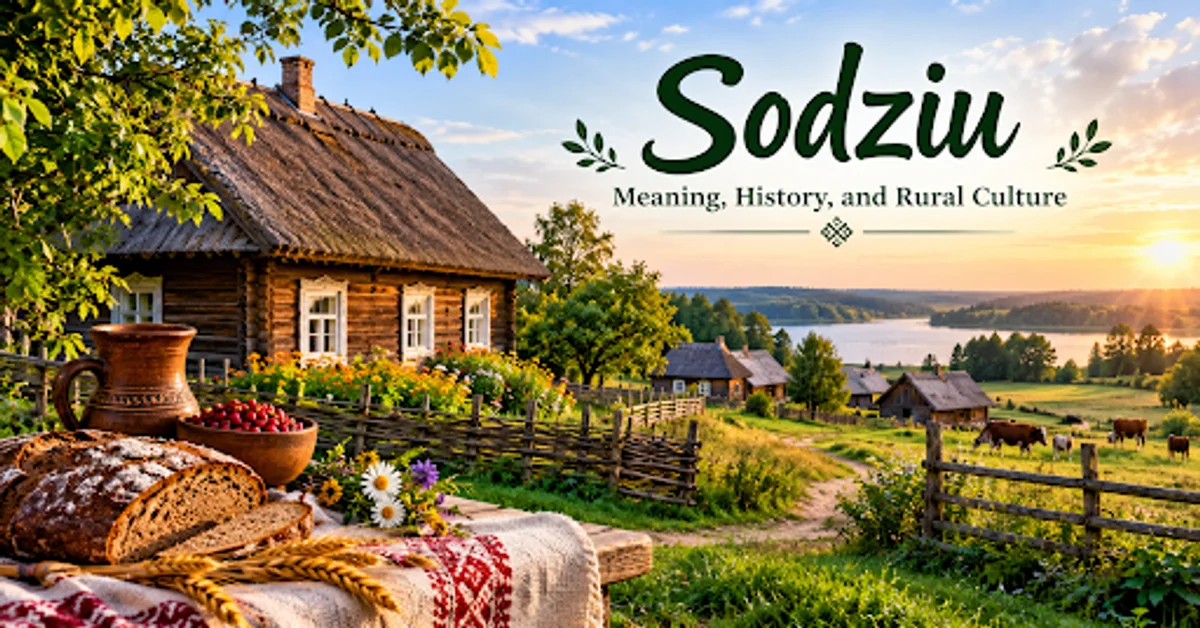
Sodziu is a village or rural settlement. The standard Lithuanian form is sodžius, while “sodziu” is commonly encountered as a simplified, unaccented spelling. The word is connected with the idea of a rural community rather than a particular product, company, application, or modern lifestyle brand.
In a cultural context, sodziu Lithuania can therefore bring to mind village communities, farmland, traditional homes, gardens, livestock, forests, seasonal work, and local customs. These associations describe the historical environment surrounding rural settlements rather than suggesting that every Lithuanian village followed the same lifestyle.
Kaimas is another important Lithuanian word associated with a village or countryside settlement. It is widely used in modern Lithuanian and overlaps with sodžius in some contexts.
The difference is therefore partly about usage, historical context, and nuance. Readers searching for sodžius vs kaimas should not assume that the two words always identify completely separate types of places. Likewise, sodžius vs. sodyba is a clearer distinction because sodyba normally refers to an individual homestead.
Related: Neworldsmagazine.com: A Complete Website Guide
The History of Sodziu in Lithuania
Origins of Lithuanian Rural Settlements
The history of Lithuanian villages reaches deep into the country’s agricultural and social past. Rural communities developed around farmland, water sources, forests, roads, and other resources needed for everyday survival and economic activity.
Village life was not identical across Lithuania. Regional geography, soil, local traditions, wealth, land ownership, and historical events all influenced settlement patterns. Different ethnographic regions developed distinctive architectural and cultural characteristics, helping create the rich diversity now associated with Lithuanian rural heritage.
How Agriculture Shaped Village Life
Agriculture influenced almost every part of traditional village life. Families could grow grains and vegetables, keep livestock, maintain gardens, collect firewood, gather wild foods, and preserve food for colder months. Farming practices followed the seasons, making the agricultural calendar an important part of community life.
Work could also encourage cooperation. Neighbors might help with demanding seasonal tasks, while families exchanged knowledge about farming, animals, food, weather, and crafts. The result was a village community in which practical knowledge was often learned through everyday experience.
Rural Changes After 1990
Lithuania’s countryside experienced major changes during the twentieth century, including the disruption caused by wars, political transformations, and Soviet collectivization. Agricultural organization changed significantly, and many older patterns of private family farming were altered.
After Lithuanian independence was restored in 1990, rural communities entered another period of transformation. Private property, modern agriculture, improved transportation, new businesses, migration, and European economic connections changed village life again. Modern Lithuanian villages therefore combine historical traditions with contemporary needs rather than representing a lifestyle frozen in time.
Traditional Sodziu Village Life
Seasonal Work and Daily Routines
Traditional Sodziu rural life was strongly seasonal. Spring was associated with preparing land and planting, summer brought crop care and haymaking, autumn focused on harvesting and preservation, and winter created more time for indoor work, repairs, crafts, and preparation for the next agricultural year.
The rhythm of work depended on weather and local conditions. Families needed to plan carefully because successful farming meant having enough food and supplies to last through the winter.
Family and Community Life
The household was an important center of rural life. Parents and grandparents could teach younger generations practical knowledge about cooking, gardening, animals, plants, crafts, weather, and seasonal customs.
Community relationships were equally valuable. Religious occasions, weddings, seasonal celebrations, markets, harvest activities, and other gatherings created opportunities for people to meet and strengthen social connections. This shared experience helped preserve Lithuanian village traditions.
Farming and Household Responsibilities
A traditional household could have many responsibilities at once. Caring for livestock, maintaining buildings, growing food, collecting fuel, preparing meals, and preserving supplies all required regular work.
Rather than relying on a single source of income or food, families often combined farming, gardening, animal keeping, crafts, foraging, and other activities. This flexible approach helped rural households respond to changing seasons and circumstances.
Lithuanian Countryside, Nature, and Agriculture
Forests, Lakes, and Meadows
The Lithuanian countryside is closely associated with forests, fields, lakes, rivers, wetlands, and meadows. Nature was not simply a backdrop to village life; it provided materials, food, water, fuel, grazing areas, and opportunities for seasonal work.
Dzūkija, one of Lithuania’s ethnographic regions, is particularly well known for its forest landscapes and traditions connected with gathering wild foods. Mushrooms and berries have long been important examples of foods collected from the natural environment.
Farming, Gardening, and Livestock
Traditional farming supported both household consumption and local economic activity. Rye, potatoes, vegetables, and other crops could be grown according to regional conditions, while gardens supplied fresh produce.
Livestock could include cattle, pigs, poultry, and horses. Animals provided food, transport, manure, materials, and—in the case of working animals—important assistance with agricultural tasks.
Traditional Beekeeping and Foraging
Beekeeping has an important place in Lithuanian rural heritage. Honey was valued as food, while beeswax had practical uses. Traditional knowledge about bees was connected with plants, flowering periods, weather, and the surrounding landscape.
Foraging added another valuable source of food. Mushrooms, berries, herbs, and other wild foods could supplement farm production. These traditions remain visible through cultural education and heritage activities today.
Traditional Sodziu Homes and Rural Architecture
Wooden Houses and Farm Buildings
Traditional wooden houses are an important part of Lithuanian rural architecture. Local materials and practical needs influenced the design of houses, barns, storage buildings, animal shelters, and other structures.
The preservation of wooden rural architecture remains an important part of Lithuanian ethnographic heritage. The Ethnographic Lithuania Museum’s collections include a substantial group of traditional wooden buildings representing Lithuania’s ethnographic regions.
Traditional Homestead Layouts
A traditional Lithuanian homestead could contain several structures organized around the needs of the household. A Lithuanian farmstead might include a main dwelling, barn, storage areas, animal buildings, garden spaces, and other practical structures.
Layouts differed according to region, period, property size, and household resources. Ethnographic villages such as Musteika provide valuable examples of historic farmstead environments, with documented groups of traditional buildings and small architectural elements.
Heating, Storage, and Household Spaces
Lithuania’s cold seasons made heating especially important. Traditional homes commonly depended on stoves or fireplaces for warmth and cooking. Food storage was also essential because families needed reliable supplies during winter.
Cellars, storage rooms, sheds, and other spaces helped households protect vegetables, preserved foods, tools, and equipment. These practical arrangements show how rural architecture developed in response to everyday needs.
Lithuanian Food and Traditional Rural Cooking
Rye Bread and Homemade Foods
Food was closely connected with farming and the seasons. Rye bread, including juoda duona, became an important part of Lithuanian food culture. Homemade bread traditions could involve carefully maintained starters, long fermentation, and baking in traditional ovens.
Other foods associated with Lithuanian cuisine include cepelinai and šaltibarščiai. These dishes belong to Lithuanian cuisine more broadly rather than exclusively to sodžius communities, but they help illustrate the country’s strong culinary heritage.
Potatoes, Vegetables, and Dairy
Potatoes became an important food in Lithuanian cooking, while vegetables, grains, dairy products, meat, mushrooms, and berries could contribute to rural diets. Household gardens provided fresh produce during the growing season.
Milk and other dairy products could be particularly valuable in farming households. Food was often prepared around what the family could grow, raise, gather, or obtain locally.
Food Preservation for Winter
Food preservation was essential before modern refrigeration and widespread commercial food distribution. Families could dry mushrooms, preserve berries, ferment vegetables, smoke or salt meat, and store root vegetables.
These methods extended the usefulness of seasonal harvests and reduced food waste. They also became part of the practical knowledge passed from older generations to younger family members.
Crafts, Folklore, and Village Traditions
Weaving, Woodworking, and Embroidery
Traditional Lithuanian crafts included weaving, linen work, wool work, woodworking, embroidery, and other practical skills. Textiles could serve everyday purposes while also displaying regional decorative patterns.
Woodworking was similarly practical and artistic. Household objects, tools, furniture, fences, and parts of buildings could be made from locally available wood. These skills are important elements of Lithuanian folk culture.
Folk Songs and Oral Traditions
Lithuanian folk songs, stories, sayings, and legends helped communities transmit knowledge and cultural identity. Oral traditions could preserve memories of work, family, nature, relationships, celebrations, and historical experiences.
Lithuanian folklore also contains figures and stories connected with nature and older Baltic mythology. These traditions developed over long periods and were influenced by changing religious and social conditions.
Traditional Skills Passed Between Generations
Traditional knowledge was often learned through observation and participation rather than formal instruction. A child could learn cooking from a parent, farming from older relatives, or a craft by watching an experienced family member.
This form of cultural transmission remains important today. Museums and cultural organizations increasingly use demonstrations and educational programs to make traditional knowledge accessible to new generations. Lithuania’s ethnographic institutions offer educational activities covering traditions, culinary heritage, architecture, and history.
Sodziu Festivals and Seasonal Celebrations
Joninės and Midsummer Traditions
Joninės, the Lithuanian midsummer celebration, is associated with bonfires, outdoor gatherings, singing, plants, wreaths, and seasonal customs. Its modern celebration reflects both historical traditions and contemporary community life.
Seasonal festivals demonstrate how closely the agricultural calendar, nature, and community gatherings were connected. They remain an attractive part of Lithuanian cultural heritage today.
Kūčios and Christmas Eve Customs
Kūčios, the traditional Christmas Eve celebration, is an important Lithuanian family tradition. Food, family gathering, remembrance, and customs associated with the Christmas season give the evening a strong cultural character.
The tradition is significant enough to be part of current heritage-preservation work. Lithuanian cultural authorities and partner institutions have prepared a UNESCO nomination concerning the Christmas Eve celebration tradition shared by Lithuania, Poland, and Ukraine.
Užgavėnės and Harvest Traditions
Užgavėnės is a lively pre-Lenten celebration known for masks, costumes, food, performances, noise, and community gatherings. It is one of the traditions commonly presented through Lithuanian cultural events.
Harvest celebrations, meanwhile, reflect the agricultural foundation of village life. Completing the year’s major farm work created an opportunity for communities to gather, share food, sing, and recognize the importance of the harvest.
Sodziu in Modern Lithuania
Rural Tourism and Traditional Sodybos
Modern Lithuanian rural tourism gives visitors opportunities to experience countryside landscapes and selected elements of traditional life. Rural properties may offer farm stays, traditional foods, craft demonstrations, nature activities, or sauna experiences.
A restored sodyba can therefore have a new role as a guesthouse, museum, cultural venue, or tourism property. Such uses can connect historic buildings with contemporary economic activity while helping visitors discover Lithuanian countryside culture.
Preserving Lithuanian Rural Heritage
Preservation is not simply about keeping old buildings untouched. It can also involve protecting crafts, songs, food traditions, farming knowledge, architecture, and community practices.
Lithuania’s cultural institutions actively support this work. The Lithuanian Ethnography Museum preserves buildings and collections representing traditional daily life, while current heritage initiatives emphasize the role of communities in maintaining cultural heritage. A 2023–2026 Vilnius University research project, for example, examined heritage experiences among 50 Lithuanian village, town, and small-city communities.
Modern Heritage Can Grow Through Tradition
Traditional heritage can remain relevant when communities adapt it thoughtfully. Rural tourism, educational programs, cultural festivals, restored farmsteads, and craft workshops can give older knowledge new audiences.
This approach recognizes that villages continue to change. Modern services, technology, transportation, employment, and housing are part of rural life, while older cultural practices can continue alongside them.
Is Sodziu a Fabric-Dyeing Technique?
The phrase Sodziu fabric dyeing appears in some online material, where Sodziu is described as a supposed textile or fabric-dyeing tradition. However, that claim should not be confused with the established meaning of sodžius as a village or rural settlement.
There are certainly genuine Lithuanian textile and craft traditions, including weaving, embroidery, and handmade textiles. However, the existence of these traditions does not establish “Sodziu” as the name of a fabric-dyeing technique.
Lithuania has many documented traditional crafts and heritage practices. For example, the country’s Ministry of Culture documents the tradition of making straw sodai, decorative geometric structures with cultural and ceremonial significance. That tradition is different from the word sodžius and should not be treated as evidence that Sodziu means textile dyeing.
Related: Forest Command Coach Polo: Complete Guide
Frequently Asked Questions
What does Sodziu mean?
Sodziu is commonly used as a simplified spelling of the Lithuanian word sodžius, which is associated with a village or rural settlement. The spelling “Sodziu” often appears when Lithuanian characters are omitted.
Is Sodziu a Lithuanian word?
The standard Lithuanian form is sodžius. “Sodziu” is an unaccented or simplified spelling that can appear in online searches and international typing environments.
What is the difference between sodžius and sodyba?
Sodžius generally refers to a village or rural settlement, while sodyba usually refers to an individual homestead, farmstead, or rural property.
Is kaimas the same as sodžius?
The terms overlap because both can relate to a village or rural settlement. Kaimas is a common modern Lithuanian word for village, while sodžius can carry an older or more traditional rural nuance depending on context.
Is Sodziu a traditional fabric-dyeing technique?
There is no reliable basis in the established meaning of sodžius for treating Sodziu as a recognized Lithuanian fabric-dyeing technique. Traditional Lithuanian textile crafts do exist, but they should be discussed under their documented names and traditions.
Can visitors experience traditional Lithuanian village culture?
Yes. Visitors can explore ethnographic museums and villages, stay at rural homesteads, discover traditional foods, participate in cultural activities, and experience forests and countryside landscapes through rural tourism.
Why is Lithuanian rural heritage important?
It preserves valuable knowledge about architecture, agriculture, food, crafts, folklore, celebrations, and community life while helping connect modern Lithuania with its historical and cultural roots.
Summary
The clearest answer to what is sodziu is that it is generally a simplified spelling of the Lithuanian sodžius, a word associated with a village or rural settlement. Its cultural meaning becomes richer when viewed through the history of Lithuanian villages, farming, family life, rural architecture, food, crafts, folklore, and seasonal celebrations.
The distinction between sodžius, kaimas, and sodyba is especially useful. A sodžius or kaimas can refer to the wider village or rural settlement, while a sodyba normally refers to an individual homestead or farmstead. Understanding these differences makes online information about Lithuanian rural culture much easier to interpret.
Today, sodziu Lithuania represents an interesting doorway into the country’s rural heritage. From wooden homes and traditional farming to rye bread, beekeeping, folk songs, festivals, forests, and modern rural tourism, many elements of countryside culture continue to connect Lithuania’s present with its past.
Most importantly, Sodziu should be understood as a language and cultural term, not as an unsupported name for a fabric-dyeing technique. Its real value lies in the history and heritage associated with Lithuania’s rural communities.