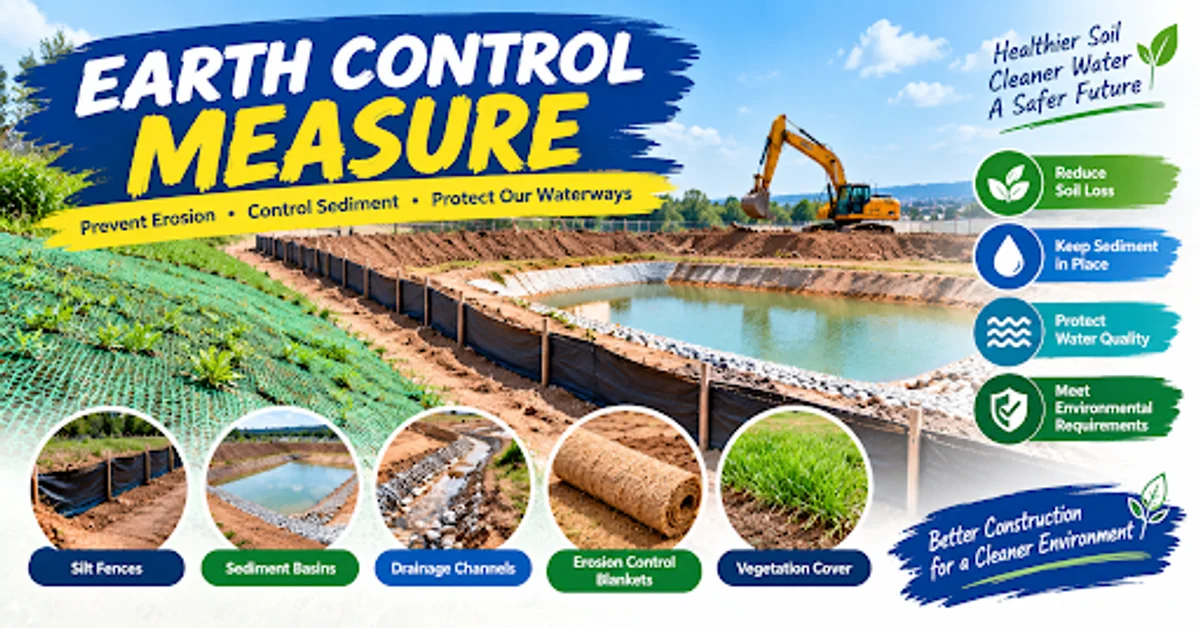
An earth control measure is a technique, structure, or management practice designed to control disturbed soil and the movement of sediment and water, particularly during construction. Common examples include silt fences, sediment basins, drainage channels, erosion control blankets, and vegetation cover.
The main purpose is to keep soil in place whenever possible and capture sediment before it leaves the work area. These practices form part of Erosion and Sediment Control (ESC), a broader approach to preventing soil loss and reducing pollution caused by construction activities.
Excavation, grading, and vegetation removal expose soil to rain and flowing water. When runoff carries loose particles into drains, rivers, or lakes, it can increase water turbidity, damage aquatic habitats, and contribute to sediment accumulation. Construction runoff may also carry waste, oil, chemicals, and other pollutants.
Earth control measures in construction help reduce these risks. They also support better site organization, reduce avoidable cleanup work, and help contractors meet applicable environmental requirements. Effective controls are most successful when they are planned before ground disturbance begins rather than added only after a problem occurs.
Related: Chromtex: Meaning, Uses, Properties, and Industrial Applications
How Does an Earth Control Measure Work?
Key Principles of Erosion and Sediment Control
Effective earth control begins with understanding the difference between erosion and sedimentation. Erosion occurs when soil particles are loosened and transported by rainfall, wind, or flowing water. Sedimentation happens when those particles settle out of moving water.
An effective system uses several complementary methods. Erosion control protects exposed soil, while sediment control captures particles that have already moved. Vegetation, mulch, soil stabilization products, geotextiles, and erosion control blankets can reduce soil loss. Silt fences and sediment basins provide additional protection by slowing or filtering sediment-laden runoff.
The Role of Drainage and Runoff Management
Stormwater management is another essential part of the earth control measure process. Rainwater should follow planned, stable routes instead of flowing freely across exposed soil, steep slopes, or excavation areas. Drainage systems and diversion channels help guide water safely through or around the construction site.
Good runoff management considers rainfall intensity, soil conditions, slope, and nearby water bodies. The objective is to prevent concentrated flows from washing away soil while avoiding new flooding or erosion problems downstream. Drainage designs should be prepared or reviewed by qualified professionals according to local requirements and site conditions.
Types of Earth Control Measures
Soil Erosion Prevention Methods
Soil erosion prevention focuses on protecting the ground before soil particles become detached. Preserving existing vegetation is often useful because plant roots hold soil together and leaves reduce the direct impact of rainfall. Where vegetation cannot be retained, temporary mulch, erosion control blankets, and suitable geotextiles may protect exposed surfaces.
Soil stabilization can also involve seeding, turf establishment, surface roughening, or other engineered treatments. Steep slopes may need additional measures, such as reinforced coverings or carefully designed drainage. The correct solution depends on the soil type, slope, weather conditions, construction schedule, and expected water flow.
Sediment Barriers and Drainage Systems
Silt fences are permeable barriers installed to intercept sediment-bearing runoff. When properly located and installed, they slow shallow water flow and allow soil particles to settle. They are not designed to withstand every concentrated flow, so they should not replace suitable drainage channels or engineered sediment-control structures.
Sediment traps and sediment basins collect runoff and provide space for suspended soil particles to settle before water leaves the site. Drainage diversions, temporary drainage channels, and storm-drain inlet protection help direct water toward appropriate control points. The US EPA lists these methods among its construction stormwater Best Management Practices (BMPs).
Importance of Earth Control Measures in Construction
Protecting Soil and Nearby Waterways
Healthy soil supports vegetation, absorbs water, and contributes to stable landscapes. When construction removes protective ground cover, rainfall can carry soil into public drains and nearby waterways. Excessive sediment can reduce light penetration, cover aquatic habitats, and affect water quality.
A well-designed earth control measure system reduces the amount of loose soil leaving the site. It can combine protected soil surfaces, controlled drainage, sediment barriers, and appropriate collection areas. These measures support water pollution prevention and help protect surrounding communities and ecosystems.
Reducing Environmental Damage and Project Risks
Poor erosion and sediment control can lead to blocked drains, muddy access roads, damaged landscaping, additional maintenance, and complaints from nearby residents. Severe runoff may also interrupt work and create safety concerns around excavations and access routes.
Planning controls early can help reduce these risks and make construction management more predictable. Earthwork environmental management should therefore be treated as part of project planning, not as an optional finishing task. However, no single measure eliminates every risk; effectiveness depends on suitable design, correct installation, and continued monitoring.
Earth Control Measure Plan and Requirements
Essential Components of an Earth Control Plan
An earth control plan explains how a construction team will prevent soil loss, collect sediment, and manage water throughout a project. Depending on the location and applicable rules, it may include site boundaries, drainage layouts, exposed soil areas, sediment-control structures, discharge points, inspection schedules, and maintenance procedures.
An Earth Control Plan (ECP) should identify potential environmental risks and specify how each risk will be managed. In Singapore, for example, the National Environment Agency (NEA) describes requirements for earth control proposals, including professional endorsement and appropriate controls before earthworks begin. Requirements differ by jurisdiction, so project teams should confirm which authority and approval process apply to their site.
Site Assessment, Design, and Documentation
Before selecting earth control measure methods, engineers should assess the site’s soil, slope, existing vegetation, drainage patterns, rainfall conditions, and proximity to waterways. An environmental impact assessment, where required, can help identify sensitive locations and the potential effects of construction activities.
The earth control measure design should show where controls will be installed and how runoff will move through the site. Supporting documents may include engineering drawings, material specifications, inspection records, and maintenance procedures. In civil engineering and environmental engineering, this planning helps ensure that controls are suitable for actual site conditions rather than simply following a generic design.
Earth Control Measure Installation Process
Preparing the Construction Site
The first step is to establish the work area and identify natural drainage routes, sensitive boundaries, and places where sediment could escape. Construction teams should preserve useful vegetation, mark protected areas, and minimize the amount of soil exposed at one time. Work can then be divided into stages so that disturbed ground is stabilized as soon as practical.
Before excavation or grading begins, the team should install the required perimeter controls, drainage diversions, and sediment collection systems. Equipment, materials, and access routes should also be organized to avoid unnecessary soil disturbance. Preparing the site properly makes the earth control measure process more manageable and reduces the chance of preventable pollution.
Installing Erosion and Sediment Control Systems
Installation should follow the approved plans, engineering specifications, and manufacturers’ instructions. Silt fences need suitable placement and secure installation, while sediment basins must have adequate capacity and appropriate inlets and outlets. Drainage channels should direct water toward stable discharge or treatment points without causing erosion elsewhere.
Where construction water contains suspended soil, an appropriate treatment system may be necessary before discharge. In Singapore, NEA guidance describes systems that can include holding ponds, silt traps, perimeter drains, and silty-water treatment plants. These are site-specific requirements, not universal equipment requirements for every project.
Earth Control Measure Inspection and Maintenance
Inspection Checklist for Construction Sites
Regular earth control measure inspection helps identify damaged barriers, blocked drains, excessive sediment buildup, and other problems before they become serious. Inspections should follow local regulations, permit conditions, project plans, and weather-related risks. Additional checks may be needed after heavy rainfall or when construction activities change drainage patterns.
A practical earth control measure checklist can include the following items:
Check silt fences for damage, gaps, and undermining.
Remove accumulated sediment when required by the design or applicable standards.
Inspect drains, channels, and inlets for blockages.
Confirm that sediment basins and treatment systems are functioning properly.
Look for muddy water escaping through unauthorized routes.
Check exposed slopes and confirm that protective coverings remain secure.
Record defects, corrective actions, and follow-up inspections.
Common Problems and Corrective Actions
Typical problems include torn silt fences, overflowing sediment traps, clogged drainage channels, and uncovered soil before rainfall. These issues may occur when equipment is poorly maintained, site conditions change, or inspections are missed. Simply installing controls is not enough; they must remain effective throughout the construction period.
Corrective actions depend on the problem. Workers may need to repair barriers, clear obstructions safely, remove sediment, stabilize exposed ground, or improve drainage under qualified supervision. If turbid water is escaping from a treatment system, the discharge should be managed according to the site’s approved procedures and applicable requirements. Inspection records help the team verify that repairs have addressed the underlying issue.
Earth Control Measure Regulations and Compliance
Environmental Guidelines and Local Requirements
Earth control measure regulations vary by country, state, municipality, project size, and receiving environment. In the United States, the Environmental Protection Agency (EPA) provides construction stormwater guidance and administers relevant federal permitting programs. Certain construction activities disturbing one acre or more may require National Pollutant Discharge Elimination System (NPDES) permit coverage, although specific eligibility and obligations depend on the applicable rules.
Singapore has its own framework involving the National Environment Agency and other relevant authorities. Its guidance addresses earth control, water pollution prevention, and construction-site environmental management. A project’s location matters: an ECP in Singapore may have specific submission and professional endorsement requirements that do not apply elsewhere. Contractors should check current official guidance rather than assuming that one country’s rules apply globally.
Responsibilities of Contractors and Site Managers
An earth control measure contractor may be responsible for installing, inspecting, and maintaining controls in accordance with the project documents. Engineers and other qualified professionals may design or review the system, while construction managers coordinate site activities, worker responsibilities, and corrective actions.
Responsibilities should be clearly documented before work begins. Depending on the applicable framework, teams may also need to retain inspection reports, obtain approvals, train workers, and report environmental incidents. NEA’s construction-site guidance highlights the role of environmental control officers in monitoring environmental issues and helping sites comply with relevant requirements.
Common Earth Control Measure Challenges
Managing Heavy Rainfall and Surface Runoff
Heavy rainfall can quickly increase runoff, overwhelm undersized drainage channels, and move sediment beyond construction boundaries. Sites with steep slopes, compacted ground, or limited drainage capacity may face additional challenges. Seasonal rainfall patterns should therefore influence construction scheduling and the selection of control measures.
Effective rainwater runoff control combines drainage planning, temporary protection, sediment collection, and early stabilization of exposed surfaces. Before forecast rainfall, teams should check that drains are clear, barriers are secure, and collection systems are ready. Construction activities may need to be adjusted when weather conditions create unacceptable environmental or safety risks.
Preventing Sediment Leakage and Control Failures
Sediment leakage often results from gaps beneath barriers, poorly positioned controls, overflowing traps, or water flowing around a treatment system. A control may also fail when the volume or speed of runoff exceeds its intended capacity. These problems show why site-specific design and regular monitoring are essential.
A reliable response starts by identifying the source of the problem and preventing further uncontrolled discharge. The team can then repair the affected system, remove accumulated sediment, and revise the design if necessary. Combining erosion prevention with sediment control provides stronger protection than depending on a single barrier.
Best Practices for Effective Earth Control Measures
Choosing Suitable Control Methods and Equipment
The best earth control measure system depends on the project’s size, soil characteristics, slope, rainfall, and environmental sensitivity. Small sites may benefit from vegetation protection, localized barriers, and simple drainage controls. Larger projects may require engineered sediment basins, treatment plants, lined channels, and coordinated monitoring.
Useful earth control measure equipment can include silt fences, geotextiles, erosion control blankets, sediment traps, pumps, and water-treatment systems. However, equipment should be selected according to the approved design and expected conditions. The EPA’s Best Management Practices (BMPs) guidance provides examples of erosion control, runoff management, sediment control, and construction-site housekeeping practices.
Long-Term Monitoring and Environmental Protection
Environmental protection should continue beyond the initial installation of controls. As construction progresses, new excavation areas and changing site levels can alter runoff patterns. The earth control plan should therefore be reviewed when site conditions, construction stages, or environmental risks change.
At project completion, disturbed areas should be stabilized using appropriate permanent vegetation, paving, or other suitable surface protection. Temporary structures should be removed when they are no longer needed and when removal will not create new erosion risks. Proper records, worker awareness, and consistent maintenance help make construction environmental management more effective over the project’s full life cycle.
Related: Microwey: Meaning, Features, Benefits, and the Future of Smart Cooking
Frequently Asked Questions
What is an earth control measure?
An earth control measure is a method or system used to prevent soil erosion, manage runoff, and control sediment during construction. Common examples include silt fences, sediment basins, drainage channels, and erosion control blankets.
What is an Earth Control Plan (ECP)?
An Earth Control Plan outlines the measures required to manage soil, sediment, and water at a construction site. Depending on local regulations, it may include drainage layouts, control structures, inspection procedures, and maintenance requirements.
Why are earth control measures important in construction?
They help prevent soil from entering drains and waterways, reduce environmental damage, support regulatory compliance, and minimize avoidable cleanup and maintenance costs.
How often should earth control measures be inspected?
Inspection frequency depends on local regulations, permit conditions, site risks, and the approved plan. Inspections should also be conducted after significant rainfall when required or when conditions suggest that controls may have been damaged or overwhelmed.
Who is responsible for earth control measures?
Responsibility is shared among project owners, contractors, site managers, engineers, and environmental personnel according to their assigned duties and local requirements. Qualified professionals may be required to design, endorse, or review the earth control plan.
Summary
An earth control measure is a practical foundation for reducing soil erosion, controlling sediment, managing stormwater, and protecting nearby waterways. Effective results depend on a combination of suitable design, careful installation, routine inspection, and timely maintenance.
Construction teams should prepare an appropriate earth control plan, select controls that match local conditions, and confirm all applicable environmental requirements. Whether a project uses silt fences, drainage diversions, sediment basins, or advanced water-treatment systems, each measure should form part of a coordinated strategy.
As construction projects place greater emphasis on environmental responsibility, earth control measures can support cleaner, better-managed worksites. Improved monitoring, more durable materials, thoughtful site planning, and appropriate treatment technologies can help teams identify problems earlier and use resources more efficiently.
The most successful approach is proactive: protect exposed soil, control water movement, maintain every system, and respond quickly to changing conditions. By making earth control a routine part of construction management, project teams can help protect the environment while supporting safe and reliable development.