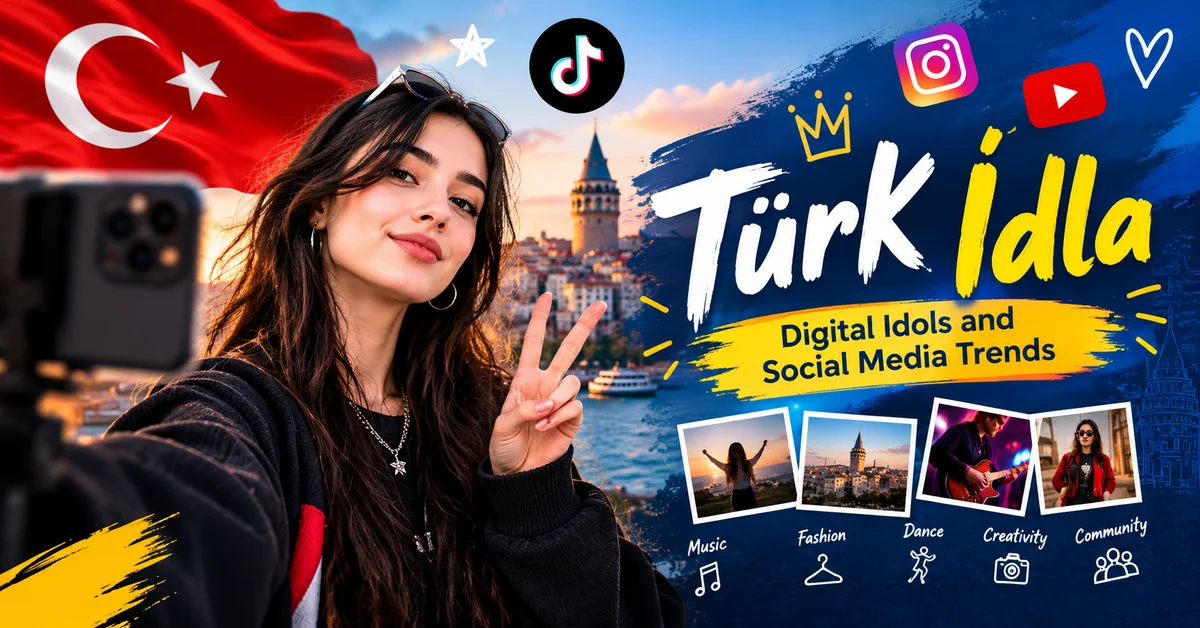
Türk İdla is an emerging online expression associated with Turkish digital culture, social media personalities, and creative self-expression. It is commonly interpreted as a combination of “Türk,” referring to Turkish identity, and “Idla,” which some online explanations connect with the English word “idol.” However, this interpretation has not been established as a verified linguistic origin.
The Türk İdla meaning is generally explained through the idea of a digital personality who attracts attention through creativity, entertainment, and a recognizable online identity. Music, fashion, dance, humor, photography, and storytelling may all contribute to this interpretation. Because the expression has no universally accepted definition, its meaning depends on the context in which it appears.
Turkish identity can influence online content through language, music, traditions, fashion, humor, and everyday experiences. A Turkish content creator might share local cultural references while using modern video editing, international music trends, and creative storytelling to connect with a wider audience.
Digital idol culture also highlights the relationship between creators and their followers. People can develop recognizable personalities through consistent content and audience engagement without becoming traditional television stars or professional performers. Türk İdla can therefore serve as a way to discuss the connection between Turkish identity and online creativity, provided it is not presented as an officially recognized category.
Related: Pravi Celer: Nutrition, Recipes, and Health Benefits
The Origin and History of Türk İdla
How the Term Türk İdla Emerged Online
The exact Türk İdla origin remains uncertain. There is no clearly established historical record identifying the person, organization, or event responsible for introducing the expression. Although some online articles describe it as a recent youth movement, that claim requires stronger evidence before it can be accepted as a documented historical fact.
Internet terminology frequently develops through social media posts, online discussions, personal blogs, and search trends. An unfamiliar phrase can spread as different websites repeat or reinterpret it. As a result, a term may attract search interest before its original meaning or history becomes clear.
What We Know About Its Linguistic Origins
The Turkish language provides a clear starting point for understanding the first part of the expression. “Türk” refers to Turkish identity and can be used in different cultural, national, and linguistic contexts. The second part, “Idla,” is less clear, and its relationship with “idol” should be treated as a possible interpretation rather than a confirmed etymology.
Understanding this distinction helps readers evaluate information about unfamiliar words. A trustworthy explanation separates established linguistic facts from assumptions and online speculation. Until reliable linguistic sources or documented examples clarify the term, Türk İdla is best described as an emerging internet expression with an uncertain origin.
Türk İdla and Turkish Digital Culture
The Influence of Turkish Culture on Online Expression
Turkey has a rich cultural environment shaped by music, food, literature, television, fashion, regional traditions, and contemporary entertainment. Digital creators can bring these influences into their content through comedy, personal stories, dance videos, cultural commentary, and visual art.
The Türk İdla Turkish culture interpretation reflects how people may combine local identity with global internet trends. One creator might feature Turkish music, while another focuses on streetwear, gaming, travel, or everyday humor. There is no single appearance or creative style that represents every Turkish digital personality.
How Digital Platforms Shape Modern Turkish Identity
Social media gives people opportunities to express their identities beyond their immediate communities. Turkish-speaking users can share experiences, discuss cultural topics, discover international creators, and participate in conversations that cross geographical boundaries.
This interaction creates a flexible form of Turkish digital identity. Creators can preserve familiar cultural references while experimenting with new formats and ideas. The resulting content may appeal to local audiences, Turkish-speaking communities abroad, or international viewers interested in Turkish culture.
The Role of Social Media in Türk İdla
TikTok, Instagram, and YouTube Creators
TikTok, Instagram, and YouTube offer different ways for creators to develop an online presence. TikTok supports short videos featuring humor, dance, music, reactions, and storytelling. Instagram combines Reels, photographs, Stories, and profile design, making it useful for visual presentation and personal branding.
YouTube offers both short-form videos and longer content, allowing creators to explore entertainment, tutorials, commentary, and personal experiences in greater depth. These digital media platforms can help independent creators reach audiences without depending entirely on traditional entertainment companies.
However, using these platforms does not automatically make someone a Türk İdla. The expression has no formal eligibility requirements, and its relevance depends on how people use and understand it.
Building an Online Identity Through Digital Content
A recognizable online identity often develops through repeated creative choices. A content creator might use a particular editing style, recurring topics, a distinctive sense of humor, or a consistent approach to visual storytelling. Over time, these elements can make the creator’s work easier for audiences to recognize.
Personal branding can support this process, but authenticity remains important. Creators who communicate honestly and maintain realistic expectations may build stronger relationships with their followers. Instead of copying every viral trend, they can use popular formats as inspiration while developing an individual voice.
Türk İdla and Modern Digital Idols
The Rise of Independent Online Personalities
Digital platforms have changed how people become visible in entertainment and popular culture. In the past, aspiring performers often depended on record labels, television networks, talent agencies, or professional managers to reach large audiences. Today, a smartphone and basic editing tools can provide a starting point.
Independent creators can publish original songs, comedy sketches, dance performances, fashion content, or personal stories. Audience responses may help them understand which ideas connect with viewers and where their creative work could develop.
This independence is an important part of the digital idol concept associated with Türk İdla. Nevertheless, online visibility does not guarantee long-term popularity, professional success, or financial stability.
Türk İdla vs. Traditional Celebrities and Influencers
Traditional celebrities often gain recognition through television, films, professional music, or other established entertainment industries. Influencers generally build audiences whose interests, preferences, or purchasing decisions they may affect through online content.
The Türk İdla interpretation places more emphasis on an idol-like digital persona, creative expression, and audience connection. A creator might combine music, visual style, storytelling, and community participation rather than concentrating mainly on sponsored promotions.
These categories can overlap. A Turkish musician may become a social media influencer, while an established celebrity may develop a digital fan community. Since Türk İdla lacks a formal definition, the distinction is interpretive rather than official.
Music, Fashion, and Creative Expression
The Role of Music, Dance, and Visual Style
Music and performance can make digital content memorable. Creators may use Turkish music, original recordings, dance routines, voiceovers, or popular audio to establish a particular mood. Carefully chosen visuals and effective video editing can further strengthen the message.
Creative storytelling also gives creators a way to share personal experiences and cultural perspectives. Short videos can communicate humor or emotion quickly, while longer formats provide space for more detailed stories. These techniques contribute to modern digital entertainment without requiring every creator to follow the same formula.
Fashion Trends and Personal Branding Online
Turkish fashion and international clothing trends can both influence online presentation. Some creators feature traditional elements, while others prefer contemporary streetwear, minimalist styles, or experimental designs. Clothing, lighting, backgrounds, and photography can become recognizable parts of a creator’s visual identity.
Personal branding is most effective when it supports genuine creative interests rather than forcing someone into an artificial image. A consistent style can help audiences recognize content, but creators should still have room to explore new interests and change direction naturally.
Türk İdla and K-Pop Culture
Similarities Between Digital Idols and K-Pop Stars
K-pop has helped popularize the concept of the idol as a performer with a distinctive image and an active fan community. Music, choreography, fashion, carefully produced videos, and audience participation all contribute to the visibility of many K-pop artists.
Some features resemble the digital idol interpretation of Türk İdla. Turkish creators may also develop recognizable styles, share performances, interact with followers, and build communities around their work. International entertainment trends can provide inspiration for creators working in many different cultural settings.
Key Differences Between Turkish Creators and K-Pop Idols
K-pop idols commonly operate within a professional entertainment system involving agencies, training, production teams, and coordinated promotional activities. Independent Turkish content creators may have greater control over their content and often produce videos using personal equipment and accessible software.
These differences make it important not to treat the two concepts as identical. K-pop is an established entertainment industry, while Türk İdla remains an uncertain online expression. Without reliable evidence, it would also be inaccurate to claim that Türk İdla originated directly from Korean popular culture.
Online Communities and Fan Engagement
How Followers Support Digital Creators
An online community can become an important part of a creator’s development. Followers may comment on new videos, share recommendations, participate in livestreams, and offer constructive feedback. These interactions can help creators understand their audience and discover new ideas.
For creators associated with the Türk İdla concept, audience engagement may be as important as the content itself. Genuine communication can create a welcoming environment in which viewers feel involved. However, creators should maintain healthy boundaries and remember that they do not need to respond to every message or share every personal detail.
Fan Participation, Trends, and Viral Content
Fan culture allows audiences to participate in entertainment rather than simply watch it. Followers may recreate dances, produce fan edits, share memes, respond to challenges, or use similar sounds in their own videos. Such activities can help content travel across different communities.
Viral content can increase visibility, but its success is difficult to predict. A video may spread because of its humor, timing, originality, or relevance to a particular audience. Sustainable digital creator culture depends on more than temporary attention; originality, respectful interaction, and consistent quality also matter.
Benefits and Challenges of Türk İdla Culture
Creative Opportunities and Potential Income
Digital creator culture offers opportunities to develop communication, editing, performance, photography, and marketing skills. Creators may also discover communities that share their interests and receive feedback that helps them improve their work.
Some established creators earn income through advertising, sponsorships, subscriptions, merchandise, music, or other commercial activities. These opportunities form part of the creator economy, while influencer marketing allows businesses to work with personalities whose audiences match their products or services.
However, earning money is not automatic. Income depends on audience engagement, platform eligibility, commercial demand, and changing policies. Creators should understand sponsorship agreements, disclose advertising appropriately, and avoid making misleading claims to their followers.
Privacy, Online Criticism, and Digital Pressure
Public visibility can bring challenges, including unwanted comments, impersonation, privacy concerns, and pressure to publish frequently. Creators may feel encouraged to follow every trend, even when it does not match their interests or personal boundaries.
Responsible habits can reduce some risks. Avoiding the disclosure of private information, using available account security settings, and setting reasonable limits on online activity can help protect creators. It is also important to evaluate criticism carefully rather than allowing every comment to determine creative decisions.
Digital popularity should not be treated as a measure of personal worth. A healthy online presence leaves room for privacy, education, work, relationships, rest, and interests outside social media.
The Future of Türk İdla
Emerging Trends in Turkish Digital Creativity
The future of Turkish digital creativity may involve new editing tools, artificial intelligence, interactive video, virtual characters, and increasingly accessible production technology. These developments could help independent creators experiment with animation, sound, translation, visual effects, and different storytelling formats.
Creators may also reach wider audiences through subtitles, multilingual content, collaborations, and cross-platform publishing. Turkish music, fashion, humor, and cultural references can provide distinctive perspectives within international digital spaces.
These possibilities describe broader developments in digital media, not confirmed predictions about Türk İdla itself. The actual direction of the expression will depend on how creators and audiences use it over time.
Will Türk İdla Become a Recognized Cultural Term?
Whether Türk İdla becomes widely recognized depends on real-world usage. Evidence such as consistent use by Turkish speakers, reliable media coverage, linguistic documentation, and established community discussions would help clarify its status.
Repeated definitions across websites are not sufficient by themselves to prove that a term represents an established movement. Readers should consider the quality of the evidence, the date of publication, and whether independent sources support the same claims.
For now, Türk İdla is best understood as an emerging online expression associated with digital identity and creator culture. Its future remains open, while the wider growth of social media creativity is already changing how people communicate and share their interests.
Related: PLG Supplies: Products, Services, and Business Guide
Frequently Asked Questions
What does Türk İdla mean?
Türk İdla is an emerging online expression associated with Turkish digital culture, online personalities, and creative self-expression. It is sometimes interpreted as combining Turkish identity with the idea of a digital idol, although its exact meaning remains unverified.
What is the origin of Türk İdla?
The exact origin of Türk İdla is unclear. There is no widely documented evidence identifying who first used the expression or when it became popular online.
Is Türk İdla an official Turkish term?
Türk İdla is not established as an officially recognized Turkish term based on currently available evidence. Its meaning and linguistic origin require further verification.
How is Türk İdla connected to social media?
Türk İdla is commonly associated with digital creators who use platforms such as TikTok, Instagram, and YouTube to share music, fashion, dance, humor, and creative content.
What is the difference between Türk İdla and an influencer?
An influencer generally builds an audience and may influence opinions or purchasing decisions. Türk İdla is interpreted more as an idol-like online identity focused on creativity, entertainment, personal expression, and fan engagement.
Summary
Türk İdla offers an interesting way to explore the relationship between Turkish identity, online self-expression, and modern creator culture. Its common interpretation connects digital personalities with music, fashion, storytelling, social media, and active fan communities. Platforms such as TikTok, Instagram, and YouTube make these forms of creative participation accessible to a broad range of people.
Nevertheless, the exact Türk İdla meaning and origin remain uncertain. Treating it as an emerging internet expression, rather than a verified cultural movement, provides a more accurate foundation for understanding the topic. Ultimately, the broader story is about how digital platforms give people new ways to express themselves, build communities, and participate in popular culture.


[…] Related: Türk İdla: Digital Idols and Social Media Trends […]