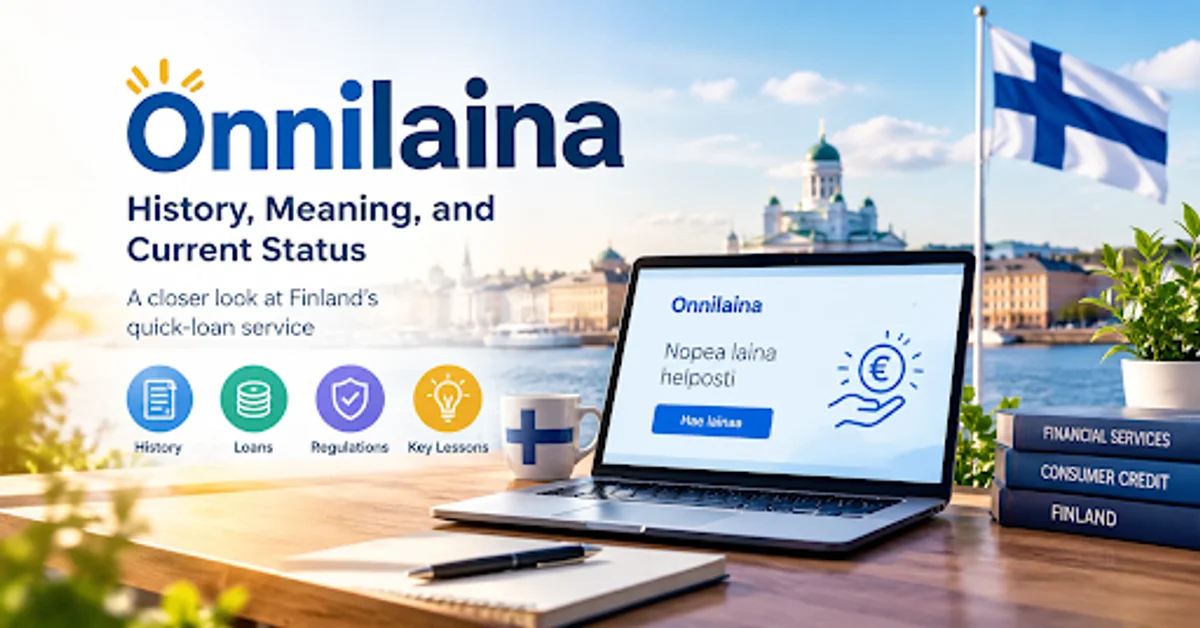
Onnilaina was a Finnish short-term consumer lending service associated with CC Rahoitus Oy. The name combines two Finnish words: onni, meaning happiness, luck, or good fortune, and laina, meaning a loan. Together, they create a name that suggests a positive borrowing experience.
However, a brand name alone cannot establish whether a financial product is affordable or suitable. To understand Onnilaina properly, it is important to examine its historical business background, the company associated with it, and the wider Finnish lending market.
Onnilaina belonged to an earlier generation of digital lending services that offered relatively small loans through online channels. In Finland, these products are commonly associated with the term pikavippi, which refers to a quick or instant loan.
Such services became popular because consumers could explore borrowing options without visiting a traditional bank branch. Nevertheless, convenience also brought concerns about borrowing costs, repayment deadlines, and financial responsibility. Onnilaina is therefore best understood as part of Finland’s online lending history rather than as a verified modern financial platform.
Related: UVLACK: Uses, Benefits, and Coating Technology
The History and Development of Onnilaina
Onnilaina and the Growth of Online Loans in Finland
During the 2000s, internet access created new opportunities for financial businesses in Finland. Online applications made it possible to request small amounts of credit through simplified processes, changing how some consumers approached short-term borrowing.
Quick-loan providers offered an alternative to conventional bank financing, which often involved different application procedures and repayment arrangements. However, the growth of the sector also encouraged greater attention to interest rates, lending practices, and consumer protection. Onnilaina emerged within this developing environment.
Historical Evidence of Onnilaina’s Operations
A particularly useful historical reference is an October 2008 investigation by Finnish broadcaster MTV Uutiset. The report identified CC Rahoitus Oy as a company providing quick loans through the Onnilaina website. This supports the conclusion that Onnilaina was an actual lending brand, not simply a modern internet term.
The available evidence does not establish the precise date when the brand launched or the exact date when it stopped accepting applications. Responsible research should distinguish confirmed historical reporting from assumptions based on older website listings or newer articles.
Who Operated Onnilaina?
Understanding CC Rahoitus Oy
CC Rahoitus Oy is the company historically associated with Onnilaina. Its Finnish business identification number was 2077917-0, and its registered municipality was Helsinki.
Understanding this connection helps explain the difference between a commercial brand and the legal business behind a financial service. A brand may appear on advertisements and websites, while the registered company is the entity identified in corporate documents. This distinction is important when investigating historical lenders or assessing a financial provider today.
Company Registration and Official Business Records
The Finnish Patent and Registration Office (PRH) maintains the Finnish Trade Register, which contains official information about registered companies. Its services allow users to examine business details and obtain company extracts through the Virre Information Service.
These records provide a stronger basis for researching a company’s identity and registration history than unsourced promotional claims. However, registration information does not reveal every detail of a company’s daily activities, customer relationships, or individual loan agreements. Those questions may require additional documents and independent reporting.
How Did Onnilaina Quick Loans Work?
Short-Term Loans and Borrowing Processes
Onnilaina was associated with short-term consumer loans designed to meet relatively immediate financial needs. In general, quick-loan services allowed customers to request a specified amount, review the proposed terms, and agree to a repayment schedule. Depending on the lender and applicable rules, these loans could be unsecured, meaning that property was not necessarily required as collateral.
The exact historical application process and eligibility requirements for Onnilaina have not been fully established. Therefore, descriptions of typical quick-loan procedures should not be mistaken for verified details of every Onnilaina product. Older third-party listings may offer clues, but original contracts and archived documentation would provide stronger evidence.
Interest Rates, Fees, and Repayment Terms
Interest rates and fees determine the true cost of a loan. The Annual Percentage Rate (APR) is a standardized measure that helps consumers compare borrowing costs, although the precise calculation and applicable requirements depend on the credit agreement and relevant law. Borrowers should also examine the total amount repayable, payment dates, and potential charges for late payments.
Historical Onnilaina loan terms should not be presented as current offers. Without reliable original documentation, specific loan amounts, repayment periods, or fees cannot be confirmed. The practical lesson is simple: before accepting any short-term credit, understand the complete financial commitment rather than focusing only on how quickly money may become available.
Finnish Consumer Credit Regulations
Changes to Finnish Loan Interest Rate Limits
Finland has introduced significant changes to consumer-credit rules since the period when Onnilaina operated. In September 2019, an interest-rate ceiling of 20% was introduced for covered consumer-credit agreements, alongside restrictions on other credit-related costs. From October 1, 2023, the general ceiling for covered consumer credit became the reference rate specified under the Interest Act of Finland plus 15 percentage points, subject to an absolute maximum of 20%.
These limits should be interpreted according to the applicable law, the type of credit, and the date of the agreement. Current rules cannot automatically be applied retrospectively to every historical loan. Anyone examining an old Onnilaina agreement should seek advice based on the contract’s date and circumstances rather than relying solely on today’s general limits.
Consumer Rights and Financial Protection
Finland’s consumer-credit framework includes requirements designed to help borrowers understand credit agreements and make informed decisions. The Finnish Competition and Consumer Authority (KKV) provides consumer guidance, while the Finnish Consumer Ombudsman supervises compliance with consumer-protection rules in its area of responsibility.
Consumers should receive clear information about credit costs, repayment obligations, and relevant contractual conditions. If a charge appears incorrect, the borrower should preserve the agreement, payment records, and correspondence before seeking guidance. These protections are important because financial transparency helps consumers identify their responsibilities and question charges that may not be justified.
Is Onnilaina Still Operating Today?
The Company’s Trade Register Removal in 2019
The historical company record provides an important clue about Onnilaina’s current status. According to the information supplied in the historical account, CC Rahoitus Oy appeared on a PRH list of companies removed from the Finnish Trade Register on October 14, 2019. The reported removal was connected with missing financial statements.
This event is evidence about the company’s registration status, but it does not establish the exact date when the Onnilaina loan service ceased operating. A business may stop offering a particular product before a formal registration change, so the two events should not be treated as identical.
Distinguishing the Original Service From Modern Websites
The original Onnilaina loan service should not be assumed to remain active simply because its name appears in search results. Websites may retain old information, use similar branding, or be operated by unrelated parties. The continued appearance of a name online does not prove that the original company is still lending.
The safest conclusion is that the continued operation of the original Onnilaina service has not been verified. Before trusting a website claiming to offer an Onnilaina loan, check its legal business name, registration details, contact information, privacy policy, and credit terms. The domain name Onnilaina.fi is a historical identifier, not proof of a currently authorized lender.
Benefits and Risks of Quick Loans
Convenience and Accessibility of Short-Term Credit
Quick loans became attractive because they offered a relatively straightforward way to request small amounts of money. Online loan applications could reduce the need for branch visits and make it easier for consumers to review options from home. For some borrowers, this represented a meaningful change in access to financial services.
However, convenience is only one part of a responsible borrowing decision. Approval does not necessarily mean a loan is affordable, and rapid access to credit does not remove the obligation to repay it. Onnilaina’s history reflects the broader development of digital lending, where accessibility must be balanced with clear terms and responsible credit assessments.
Borrowing Costs and Responsible Financial Decisions
Short-term loans can create difficulties when repayment falls due before the borrower has enough money available. Interest, additional charges, and missed-payment consequences may increase financial pressure. Finland’s public financial and debt-counselling guidance therefore encourages consumers to study credit conditions carefully before signing an agreement.
Responsible borrowing starts with a realistic budget. Consumers should calculate the total repayment amount, consider essential household expenses, and assess whether they can meet the deadline without taking another loan. Comparing alternatives, contacting creditors early when difficulties arise, and seeking independent debt advice can help prevent a temporary financial gap from becoming a longer-term problem.
How to Research Historical Lending Services
Verifying Lenders Through Official Records
Researching a historical financial service requires more than searching its name. Start with the company’s legal name and business identification number, then consult official registration records. For Onnilaina, CC Rahoitus Oy and Business ID 2077917-0 provide useful identifiers for tracing the former operator.
The Finnish Patent and Registration Office provides access to company information through its online services. Researchers can use these records to examine registered details and available documents, including relevant financial statements. However, official records should be combined with reliable media reports and historical website evidence to build a fuller picture of a business.
Identifying Reliable Sources and Avoiding Misleading Claims
Online articles about historical lending brands may repeat information without identifying their sources. Some may describe a former lender as a current financial platform or attribute modern technology features to a business without sufficient evidence. These claims should be checked against independent reporting and official records.
For Onnilaina, the 2008 MTV Uutiset report and the company’s registration history offer useful starting points. Readers should distinguish documented facts from interpretations, particularly when researching loan amounts, company activities, or the service’s closure. This approach makes an article more accurate and helps readers understand what remains uncertain.
What Can Consumers Learn From Onnilaina?
The Importance of Transparent Loan Agreements
Onnilaina’s history highlights why a financial brand should always be connected to an identifiable legal business. Before entering a credit agreement, consumers should know who provides the loan, how much they will repay, when payments are due, and what happens if a payment is missed.
Clear documentation also helps consumers resolve disagreements. Keep a copy of the agreement, payment confirmations, and communications with the lender. If a debt is transferred to a collection company, verify the creditor’s identity and the amount claimed. These straightforward habits can support better financial decisions and reduce confusion when problems arise.
Lessons for Today’s Online Borrowers
Digital lending continues to make financial products easier to access, but consumers still need to evaluate offers carefully. A professional-looking website, reassuring language, or quick approval process does not independently establish a lender’s reliability.
Use official records to verify the business and read the full terms before providing personal information or accepting credit. Compare the APR and total repayment amount across suitable alternatives. Most importantly, borrow only when the repayment plan fits your budget. These principles remain relevant whether a consumer is investigating a historical name like Onnilaina or considering a modern online lending service.
Related: Chromtex: Meaning, Uses, Properties, and Industrial Applications
Frequently Asked Questions
Who Operated Onnilaina and When Did It Begin?
Historical reporting from October 2008 identified CC Rahoitus Oy as the company offering quick loans through the Onnilaina website. Its business identification number was 2077917-0. The exact launch date of the Onnilaina brand has not been established, so 2008 should be treated as a documented point in its history rather than a confirmed launch year.
What Is Onnilaina’s Current Status?
The original Onnilaina lending service has not been verified as an active lender. Its historical operator, CC Rahoitus Oy, was removed from the Finnish Trade Register in October 2019, according to the supplied historical account. This does not independently establish the exact date the service closed.
Was Onnilaina a Traditional Bank?
No available historical evidence identifies Onnilaina as a conventional deposit-taking bank. It is described as a short-term consumer lending service associated with Finland’s quick-loan market. Its business model was distinct from traditional banking products such as mortgages and longer-term personal loans.
What Does the Word Onnilaina Mean?
The name combines the Finnish words onni, meaning happiness, luck, or good fortune, and laina, meaning loan. Although the wording has a positive association, it does not establish the cost, safety, or suitability of a financial product.
What Should Consumers Check Before Taking an Online Loan?
Consumers should verify the lender’s legal identity, examine the APR and total repayment amount, review payment deadlines, and understand charges associated with missed payments. They should also confirm that the provider meets applicable registration and regulatory requirements before signing an agreement.
Summary
Onnilaina represents a documented part of Finland’s earlier short-term consumer lending market. Its connection with CC Rahoitus Oy was reported by MTV Uutiset in 2008, while later company-registration information provides important context about the former operator’s status. The exact launch and closure dates, however, remain unconfirmed by the evidence discussed here.
Its history illustrates how digital financial services changed access to credit and why consumer protection became an important part of the lending landscape. Finland’s evolving credit regulations demonstrate the importance of examining borrowing costs, contractual obligations, and lender accountability.
For anyone researching Onnilaina today, the most reliable approach is to separate its historical identity from any modern website using a similar name. Official business records, credible reporting, and original loan documentation are more useful than unsupported online descriptions.
Ultimately, the story of Onnilaina offers a valuable reminder: informed borrowing begins with transparent terms, verified business information, and a realistic repayment plan. These principles help consumers navigate online financial services with greater confidence, whether they are studying a former lender or evaluating a new credit offer.


[…] Related: Onnilaina: History, Meaning, and Current Status […]
[…] Related: Onnilaina: History, Meaning, and Current Status […]